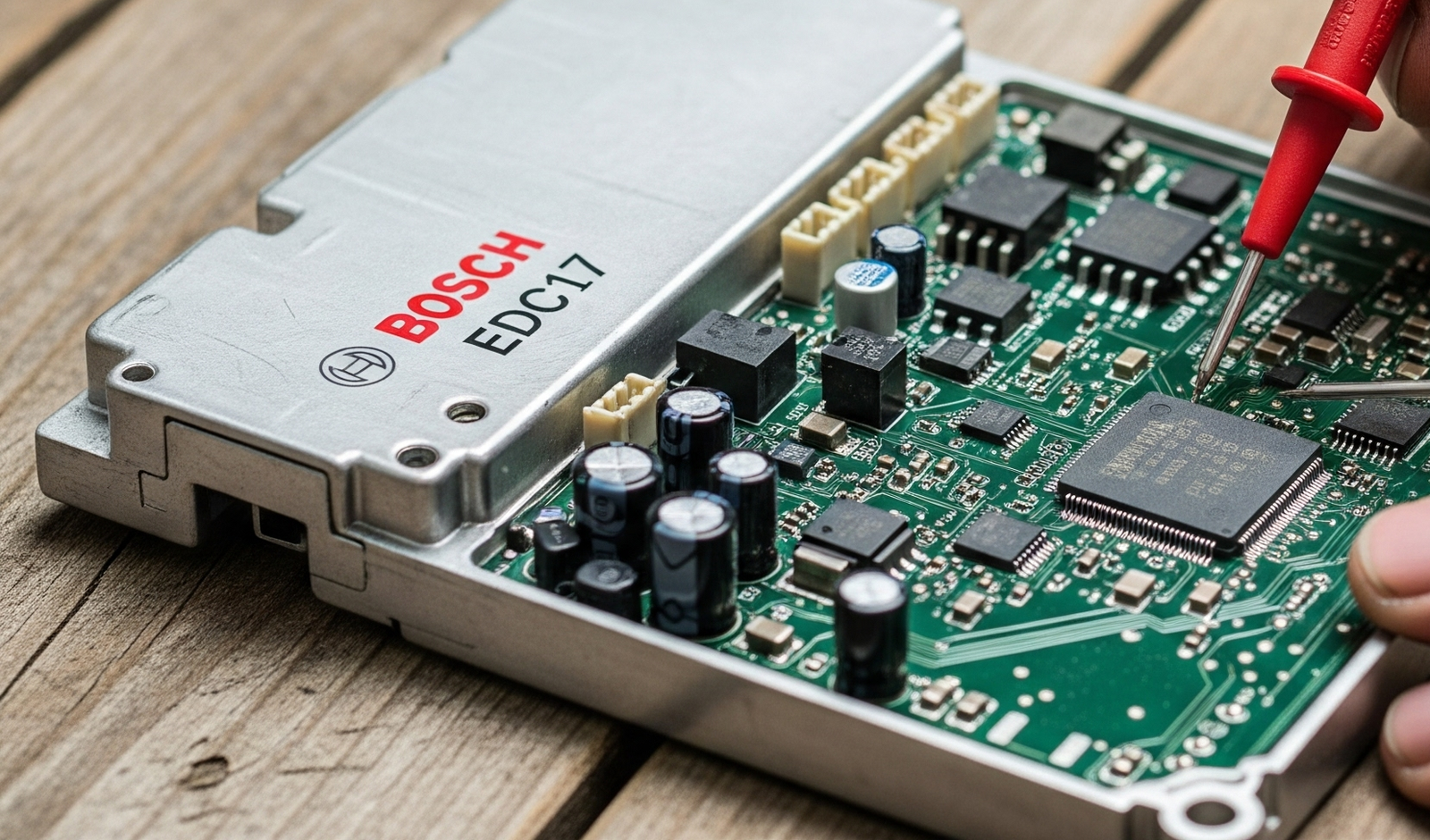
This case study covers a real-world Bosch EDC17 ECU tuning project, from extracting the ECU’s firmware to implementing a Stage 1 ECU tuning (performance remap) aimed at improving fuel efficiency, torque, and emissions compliance. The project scope was to unlock additional performance from the vehicle’s stock hardware without compromising safety or reliability. The client, an automotive enthusiast, wanted a noticeable boost in power and throttle response, but also emphasized maintaining engine longevity and meeting emission standards.
Project Goals: Extract the original ECU calibration (firmware), perform thorough static and dynamic analysis, identify key calibration maps (fuel, torque, ignition timing), and apply safe Stage 1 adjustments. The outcome should be improved horsepower and torque, crisper throttle response, and even a mild gain in fuel economy, all while keeping the car road-legal and within OEM safety margins. Modern engine ECUs manage thousands of parameters (fuel injection timing, ignition advance, boost pressure, air-fuel ratios, emissions controls, etc.), and manufacturers often leave a margin of untapped potential for the sake of various regulations. By carefully recalibrating these parameters (a process often called ECU remapping or performance tuning), we aimed to unlock that hidden potential while preserving reliability.
Are you interested in unlocking your vehicle’s hidden performance?
ECU Background: Bosch EDC17 ECU Overview
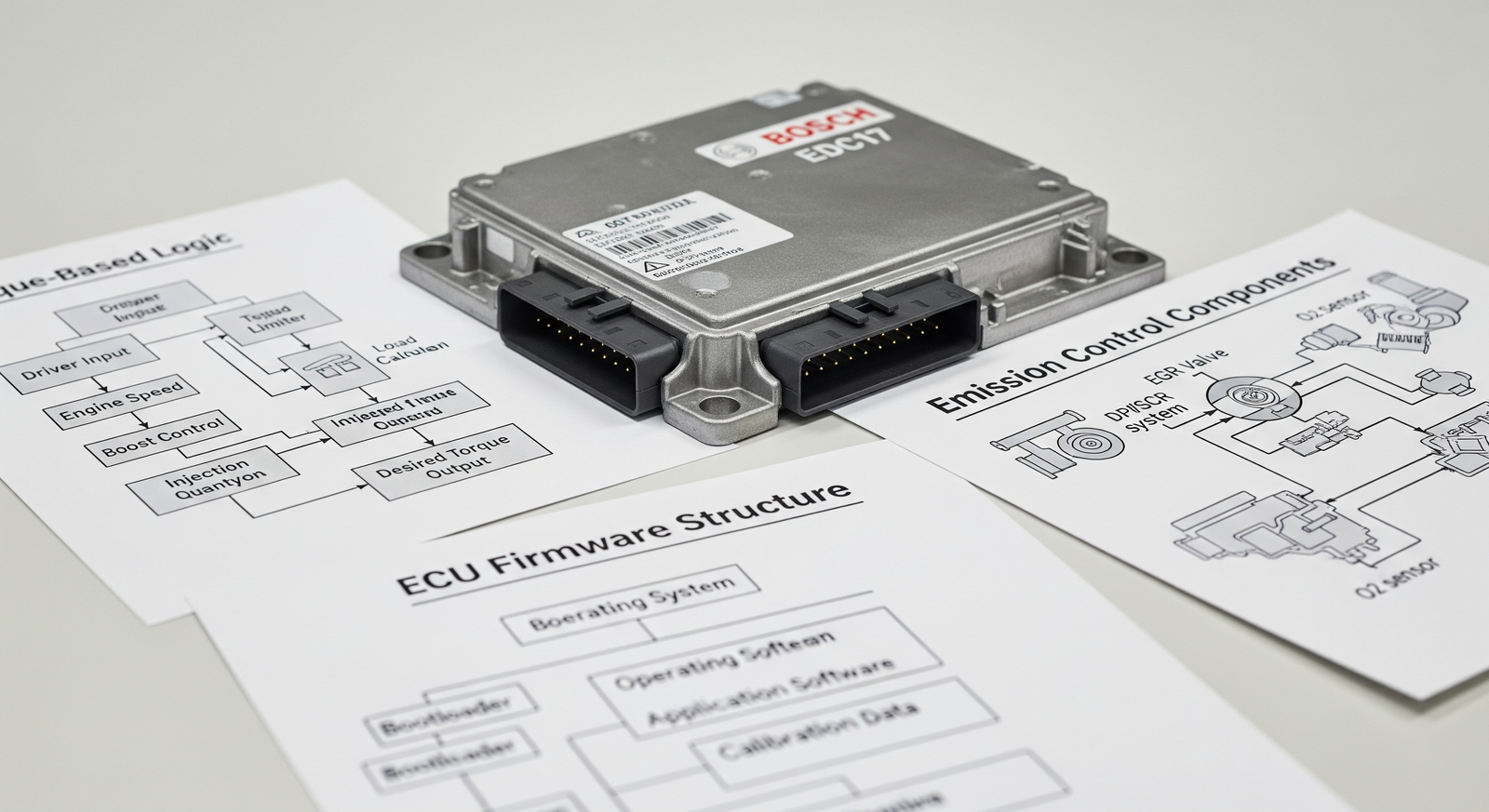
The Bosch EDC17 ECU (Electronic Diesel Control) is a family of engine control units introduced in the late 2000s to meet stricter emissions (Euro 5/6) and performance demands. It’s a direct successor to Bosch EDC16, featuring a more powerful microprocessor and larger memory to handle complex algorithms. Bosch EDC17 ECUs are torque-based systems, meaning they centrally calculate and coordinate torque requests from various sources (engine, transmission, cruise control, etc.) to optimize engine output and efficiency. This ECU is widely used in modern diesel vehicles (VW/Audi TDI, BMW diesel, etc.) and is known for incorporating advanced features like Infineon TriCore processors and automotive open system architecture (Autosar) support.
In practical terms, the Bosch EDC17 ECU controls every critical aspect of combustion and emissions. It precisely manages fuel injection timing and quantity, boost (manifold pressure) regulation, exhaust gas recirculation (EGR), and even coordinates after-treatment systems like diesel particulate filters (DPF) and selective catalytic reduction (SCR/AdBlue) for NOx control. The ECU actively adjusts injection parameters for each cylinder (e.g. timing and duration) and can make adaptive changes over the engine’s life to maintain optimal performance. This level of control is what enables modern diesels to be both powerful and clean-running.
Importantly, the Bosch EDC17 ECU’s robust architecture comes with built-in safety and compliance measures. It has torque monitoring tables and fail-safe limits to prevent the engine from exceeding safe torque outputs. It also monitors sensors (boost pressure, fuel rail pressure, exhaust temperatures, etc.) and will trigger protective actions (like reducing power or “limp mode”) if it detects readings outside permissible ranges. These features make it critical that any tuning respects the ECU’s logic instead of bypassing it. In summary, the Bosch EDC17 ECU provides a flexible yet tightly-regulated platform – ideal for tuning when approached carefully, as it offers many avenues for optimization while safeguarding the engine and emissions when properly calibrated.
The first step was to acquire the ECU’s firmware (the binary software containing both the program code and calibration data/maps). We opted for a bench flash method to ensure a thorough read. This involved removing the Bosch EDC17 ECU from the vehicle and connecting it on the workbench via a TriCore boot mode interface.
Modern ECU tuning tools like Alientech KESSv2/KESS3, K-TAG, Dimsport NewGenius/Trasdata, Magic Motorsport MPC, etc., support reading/writing Bosch EDC17 ECUs. In this case, we used a bench programmer that communicates with the Bosch EDC17’s Infineon TriCore processor through the ECU’s connector (using a breakout harness). This method provided direct low-level access to the ECU’s flash memory, which is necessary because many EDC17 units have advanced protection (such as “TPROT” anti-tuning locks) that limit OBD port reading.
Using the bench setup, we powered the ECU in a controlled environment and entered boot mode (by activating the required boot pin on the circuit, per Bosch’s documentation). The interface tool initiated communication and we successfully downloaded the full firmware image. We performed a full backup of the ECU including the calibration flash and EEPROM data before making any changes. This original file is saved as a safety measure for rollback capability and as a reference. The reading process was non-intrusive and completed without error, yielding the exact stock ECU calibration file for analysis.
Throughout this process, caution was paramount: we maintained stable voltage to the ECU (using a regulated power supply) and followed the correct pinout/wiring instructions from the tool manufacturer to avoid any data corruption.
The result was a verified original firmware file (often referred to as the “ORI”). With the stock firmware in hand, we could move on to offline analysis. (Note: In some cases, reading an Bosch EDC17 ECU can also be done via the OBD-II port with the right tools; for example, some tuners do a virtual read by pulling the stock file from an online database based on the ECU ID. However, for maximum thoroughness and a bespoke tune, we chose the bench method to get the full image directly.)
Map Identification & Analysis (Fuel, Torque, Ignition)
Once the firmware was extracted, the next phase was static analysis of the ECU calibration. We loaded the binary file into specialized ECU tuning software (WinOLS in this case), which allows us to visualize and edit the numerous calibration tables (“maps”) embedded in the firmware. This is a crucial step the raw binary is essentially a hex dump, so we rely on map definitions (from our experience or community damos/A2L files) to locate meaningful data.
After reading the file from the ECU, the task was to find and identify the tables related to the engine’s calibration and performance. Using WinOLS, along with our database of Bosch map addresses, we systematically uncovered the relevant maps and their axes (understanding the X-axis and Y-axis units – typically engine RPM, load or torque, boost pressure, etc. is critical to interpret each table correctly).
Key Calibration Maps Identified: We pinpointed dozens of maps, with the most important for this Stage 1 tune summarized below:
- Fuel Maps: These include main injection quantity maps (fuel volume delivered per cycle under various RPM vs. load conditions) and lambda (air-fuel ratio) targets. For a diesel Bosch EDC17 ECU, fuel maps often dictate how much fuel is injected based on driver request and operating conditions.
- Injection Timing Maps (Ignition Timing): Controls when fuel is injected in the combustion cycle. In a diesel, this effectively serves a similar role to ignition timing earlier or later injection affects power, efficiency, and peak cylinder pressure. We identified maps for both main injection timing and possibly pilot injections.
- Boost Maps: Desired turbocharger pressure levels across the RPM/load range. These maps tell the ECU what manifold pressure to target. We also located boost limiter maps (safety limits for boost to protect the turbo and engine) and the turbo wastegate or VNT control maps that achieve those targets.
- Torque Limiter Maps: Since EDC17 is torque-oriented, we have maps capping the engine torque under various conditions (gear-based torque limiters, clutch protection, etc.). These had to be raised carefully to allow more torque output after tuning.
- Rail Pressure Maps: For diesels, the fuel rail pressure map controls injection pressure. Higher rail pressure can improve fuel atomization (thus power) but is limited by the fuel system’s capacity.
- EGR Maps: These govern how much exhaust gas recirculation is used at different operating points (to reduce NOx emissions). For Stage 1, we usually review these to ensure any changes in fueling/boost won’t conflict with EGR operation. In this project we left EGR settings largely stock for emissions compliance.
- DPF Regeneration Maps: Control automatic cleaning cycles of the diesel particulate filter. We verify these to make sure any fueling changes won’t inhibit regen. (No deletion or disabling was done the DPF remains active.)
- Smoke Limiter Map: This is a crucial map that limits fueling based on available air (it effectively prevents excessive smoke by capping fuel if boost is insufficient). We inspected this to adjust it in tandem with increased boost, so that we could supply more fuel without smoking.
- Torque-to-Fuel Conversion and Torque Monitoring: The ECU uses model-based torque monitoring to ensure the engine doesn’t make more torque than requested or safe. We identified these tables to understand stock torque calculations and ensure our tune stays within reasonable limits.
Each map was analyzed in its stock form to understand the OEM calibration strategy. For instance, we observed that the factory fuel map had relatively conservative injection quantities at higher RPM – likely to protect components and meet emissions. The boost target map showed a peak boost of around, say, 1.2 bar in mid-range – leaving some headroom before the turbo’s max. Torque limiters were set close to the engine’s advertised torque (e.g., ~400 Nm in stock calibration for this engine) and even lower in lower gears to protect the drivetrain. These observations gave us a baseline for how much headroom we had for tuning.
We also cross-referenced these findings with known data for similar engines. Using manufacturer documentation and community damos files as a guide, we double-checked that we correctly identified map axes (for example, confirming if an axis was engine load vs RPM or throttle position vs RPM, etc.). This step is critical a mistake in identifying a map could lead to incorrect changes. Fortunately, our tooling and experience allowed accurate map recognition.
Before proceeding to modify anything, we made sure to handle checksums and data integrity. Modern ECUs like the Bosch EDC17 ECU have checksum algorithms that verify the firmware’s integrity; any change in the binary requires recalculation of these checksums. Our WinOLS software includes plugins to automatically correct checksums for Bosch ECUs. We enabled this feature so that after editing the maps, the software updated all necessary checksums to ensure the ECU will accept the modified file without error. Proper checksum correction is crucial it guarantees that the tuned firmware will run reliably in the ECU.
By the end of this phase, we had a clear picture of the stock engine calibration and a plan for which maps to adjust for the Stage 1 tune. The groundwork was laid for the actual calibration changes, with all moves carefully plotted on paper before writing anything to the ECU.
Tuning Strategy: Bosch EDC17 ECU Stage 1 Remap

With the calibration maps identified, we crafted a Stage 1 tuning strategy focused on moderate, safe gains. Stage 1 means we are working with a stock engine (no hardware changes), so the goal is to maximize the stock hardware’s potential without over-stressing any components. Below are the key adjustments we made, along with the safety considerations for each:
- Fuel Delivery: We increased the fuel injection quantity in the high-load regions of the main fuel map to provide more fuel for combustion when full power is demanded. This yields higher torque and horsepower. Our adjustments were modest (~ +10-15% extra fuel at peak torque and high RPM) and carefully blended into surrounding cells to avoid abrupt changes. Crucially, we balanced fueling with available air ensuring the air-fuel mixture remains efficient. We leveraged the stock smoke limiter map, raising it only in conjunction with increased boost so that the engine won’t inject fuel beyond what the turbo can supply in air (preventing excess smoke). At mid-load and cruising areas, we left fueling near stock or even leaned it out slightly where possible, aiming to improve fuel efficiency during normal driving. The result is more fuel when you floor it, but equal or less fuel when you’re just cruising contributing to both power and economy.
- Injection Timing (Ignition Timing): To complement the added fuel, we advanced the main injection timing slightly at higher loads. Diesel engines generate more power and run cooler EGTs when injection timing is optimized (but too much advance can cause a harsh combustion “knock” and high cylinder pressure). Our tune advances timing only within safe limits, effectively starting combustion a bit earlier to extract more energy from the added fuel. This leads to more torque and also helps control exhaust gas temperatures. We ensured that the injection timing still stays within manufacturer-specified safe windows to avoid excessive peak pressure. The pilot injection timings (small pre-injections for noise control) were left stock to maintain smoothness. Net effect: more efficient combustion, which boosts power and can even reduce some emissions due to more complete burn.
- Boost & Turbo Control: We raised the turbo boost targets across the rev range to increase the air supply. The Stage 1 boost curve was uplifted by roughly +10% in the mid-range and at the top end. For example, if stock peak boost was ~1.2 bar, we targeted ~1.3–1.35 bar at peak. This additional boost, combined with recalibrated VNT (variable turbo vane) maps, ensures the engine has enough air to burn the extra fuel cleanly (maintaining an appropriate lambda). We kept a margin below the turbo’s absolute capacity – this prevents overspeeding the turbocharger. We also adjusted boost ramp-up for a slightly faster spool, improving low-end response, but avoided aggressive spikes to protect the turbo and engine internals. Boost limiter and overboost protection maps were raised accordingly, but still below failure thresholds, so if ever boost overshoots (due to extreme conditions), the ECU will intervene. During tuning, we monitored that under full load boost tracks the new requested values closely without oscillation, indicating the turbo control calibration is stable.
- Torque Limiters & Driver Demand: The various torque limiter maps were increased to allow the higher engine output. On the main torque limiter, we gave the engine “permission” to produce the additional torque (for instance, if stock limit was 400 Nm, we raised it to ~450+ Nm in line with our expected gains). We also adjusted gear-dependent torque limits (some ECUs limit torque in 1st/2nd gear to prevent wheelspin or protect the transmission). We kept those reasonable – allowing a bit more torque in lower gears for better acceleration, but not so much as to overwhelm the tires or gearbox. The driver demand (driver wish) map which translates pedal position to requested torque was tweaked to make throttle response sharper. We smoothed out any flat spots in the accelerator mapping, so the car feels more eager without being jumpy. The goal was smooth and progressive torque delivery that the drivetrain can handle. In fact, the tuned torque curve was shaped to be flatter and broader: we limited the very low-end torque slightly (to avoid sudden stress on the transmission) but gained much more mid-range and top-end torque. By doing so, peak torque comes on a tad later but stays longer, which preserves traction and gearbox health. The result is a very linear and strong acceleration, rather than an abrupt hit of torque that could cause mechanical strain.
- Rail Pressure: We raised the fuel rail pressure by a small increment (e.g. from 1600 bar to 1700 bar at full load) within the system’s design limits. Higher pressure helps finer fuel atomization, improving power and economy. The increase was kept conservative to avoid undue stress on injectors and pump. All high-pressure fuel safety limit maps were kept active, so in case of any anomaly (like pressure too high), the ECU would still trigger a protective response.
- Emissions Control Systems: Notably, we did not disable any emissions control components. The EGR system remained active, though we slightly adjusted its operation only in high-load regions where it normally closes anyway (ensuring it doesn’t needlessly recirculate exhaust when full power is required). The DPF regeneration strategy was left stock our fueling changes were within bounds that won’t overload the DPF with soot. In fact, by keeping combustion efficient (more air, proper timing), the soot output per power unit can decrease, meaning emissions are still well-managed. We strictly avoided any practice of removing DPF, EGR, or SCR functionality in this Stage 1 tune as this project’s aim was to improve performance while staying street legal.
- Safety Margins & Failsafes: Throughout the calibration process, we were mindful of the Bosch EDC17 ECU’s built-in safeguards. We did not remove any OEM safety limiters – all temperature, pressure, and torque monitoring routines remain in place. For example, if exhaust gas temperature (EGT) exceeds a certain threshold or if the DPF differential pressure gets too high, the ECU will still react (by reducing power or triggering regen). The tuned maps were all within a range that keeps the ECU’s logic comfortable. We effectively calibrated the engine to a new, higher-performing “normal,” but within engineering limits. As an extra precaution, we verified that the final tune’s requested torque aligns with the calculated torque that the ECU monitors (to avoid triggering the torque monitoring limp mode). By maintaining this harmony, we ensure the ECU doesn’t “fight” the tune. The factory fail-safe protections (limp modes) remain as a safety net, but our goal was that under normal conditions they never activate because the tune stays in the safe envelope. In short, all factory reliability mechanisms are retained we simply realigned some thresholds to our new targets, but well below anything that would endanger the engine.
After making these calibration changes in WinOLS, we double-checked everything: map smoothness (no abrupt kinks or discontinuities), plausible values, and correct axis scaling. We then recomputed checksums (automatically handled by our tools) and prepared the modified firmware file for testing. The next step was to write this Stage 1 calibrated file back to the ECU and validate the results in the real world.
On-Vehicle Validation (Testing & Telemetry)
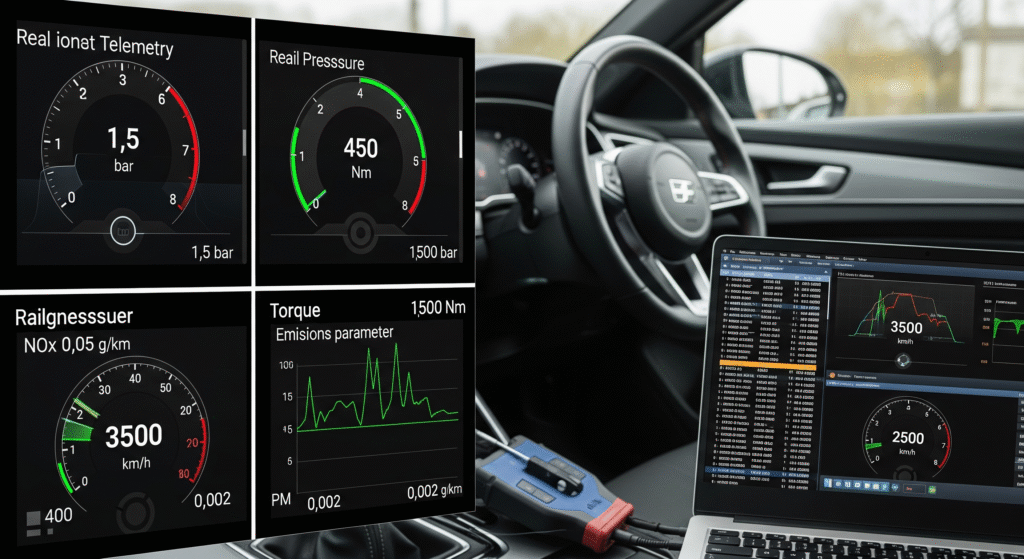
After flashing the modified Stage 1 firmware into the Bosch EDC17 ECU, we reinstalled the unit back into the vehicle and began a comprehensive validation process. This phase is about answering the question: Does the car perform as expected, and is it running safely?
Initial startup and idle: Upon turning the key, the engine fired up normally, a good first sign that the ECU accepted the tune (thanks to proper checksum and coding). We let the engine idle and come up to temperature while closely monitoring for any irregular behavior. Idle was smooth and unchanged from stock, and no warning lights or fault codes appeared on the dashboard or scan tool. This indicated that all critical systems (air-fuel mixture, EGR operation, etc.) were happy at idle with the new calibration.
Diagnostic scan: We connected a diagnostic scanner to check for any stored fault codes (DTCs) in the ECU’s memory. None were present, meaning the ECU did not detect any issues with sensors or systems post-flash. We also verified live data at idle parameters like fuel pressure, airflow, EGR command, etc., were within normal ranges. This gave us confidence to proceed to dynamic testing.
Road testing and logging: Next, we performed controlled road tests and dyno runs to observe the engine’s performance under load. We used a combination of on-board diagnostics logging (via OBD-II interface to record parameters) and an external chassis dynamometer for quantitative measurements. During road tests, the improvements were immediately noticeable: the car felt more responsive to throttle input and had a stronger pull through the mid-range. But seat-of-the-pants impressions aren’t enough – we relied on telemetry to ensure everything was within spec:
- Boost Pressure: We logged boost pressure (turbocharger output) versus the ECU’s target. The data showed that boost was achieving our new targets (e.g., peaking around ~1.3 bar as commanded) and the boost control was stable with no oscillation. Crucially, there was no overboost beyond our target the wastegate/VNT was regulating properly. At full throttle, requested vs. actual boost matched closely, demonstrating that our boost calibration was on point.
- Fuel System: Fuel rail pressure was monitored under high load. It climbed to the new target (for instance ~1700 bar) and stayed steady, indicating the high-pressure pump and injectors were handling the slight increase without strain. Injector on-times (duration) were increased as expected (due to more fuel), but well within safe limits (not so long that they encroach into the next combustion cycle). No misfire or combustion anomalies were detected – combustion remained smooth. We also kept an eye on short-term fuel trims; in a properly tuned diesel, these remain minimal, and indeed they were, showing that our fueling changes were as intended.
- Engine Temperatures: We were particularly concerned with Exhaust Gas Temperatures (EGTs) under sustained full load, as EGT is a proxy for how hard the engine and turbo are working. Using both OBD data and an aftermarket EGT gauge, we observed peak EGTs in the range of ~800–850°C during heavy acceleration – this is within safe bounds for a modern turbo-diesel. (For reference, the stock tune EGT might reach ~750°C in the same conditions; the slight increase we saw is expected with more fuel but still below the ~900°C caution zone.) Engine coolant and oil temperatures remained at normal levels, indicating no thermal stress in continuous use.
- Emissions & DPF: Even though we don’t have a lab-grade emissions tester on the road, we can gauge some effects. There was no visible smoke out the tailpipe during full-throttle acceleration – a critical indicator that our air-fuel ratio stayed clean. The car’s DPF regeneration status was monitored over a longer drive cycle: the DPF parameters (like soot loading and regen frequency) remained normal. This told us that our tune did not produce excessive soot that would clog the DPF prematurely. Additionally, the EGR system functioned normally (we logged EGR commanded vs. actual under heavy throttle the EGR naturally closes, as per stock behavior, and our tune kept that logic). Post-drive, we checked the DPF pressure sensor readings: at idle the DPF pressure was low (healthy, indicating no new blockage). Overall, emissions control systems behaved exactly as stock the car should have no trouble passing an emissions inspection, as all monitors and catalysts are intact and functional.
- Engine & Drivetrain Behavior: We also observed general drivability: throttle modulation was improved (no lag between pedal and engine response), and the power delivery was very smooth thanks to our careful torque management. There were no signs of clutch slipping or transmission shock partly because we kept torque within the gearbox’s safe limit. The automatic transmission (if applicable) shifted normally and actually benefited from the smoother torque curve (no sudden spikes to upset shift timing). The ECU did not trigger any torque intervention or limp mode, confirming that we stayed within the ECU’s allowed torque envelope (we had increased those limits in tandem with the performance gains).
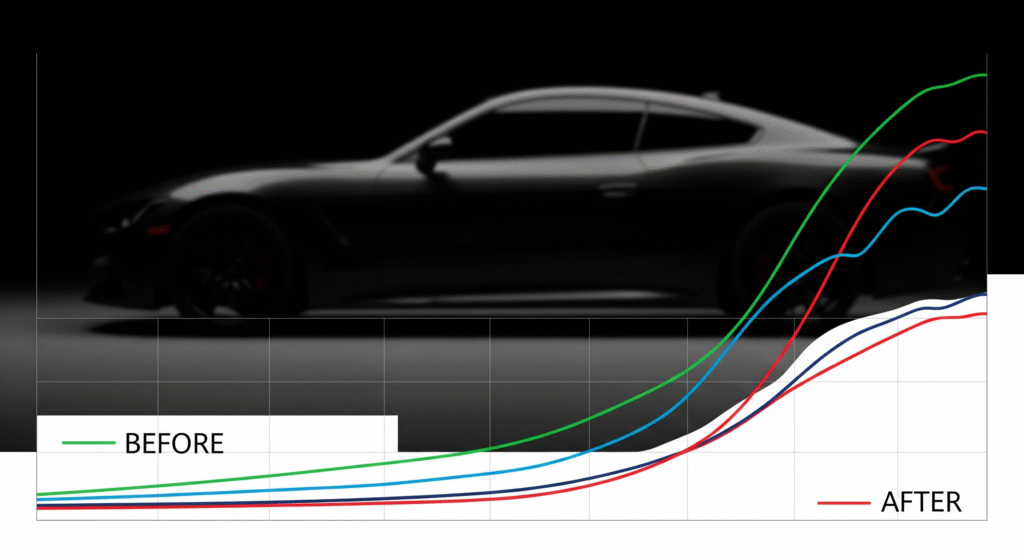
- Dyno Results: We conducted a chassis dyno test to quantify the performance gains. The dyno plot showed a clear increase in both peak power and peak torque compared to stock. The entire power curve was elevated: torque was higher from low RPM onwards, and horsepower held strong to a higher RPM than before. We also noted the area under the curve (overall power delivery) was substantially improved meaning the car pulls harder across the range, not just at one point. (We’ll present the numbers in the Results section next.)
Throughout the testing, we remained vigilant. We did multiple pulls and some extended drives to ensure consistency. After validating the tune in various conditions (city traffic, highway cruising, full throttle bursts, uphill loads, etc.), we were satisfied that the Stage 1 tune was stable, safe, and effective. We did not encounter any adverse effects no check engine lights, no limp modes, and no abnormal mechanical noises or behaviors. The engine’s character was essentially the same but energized with extra performance.
In the rare event that something had been off (for example, if EGTs were too high or if we saw any knocking or instability), our plan would have been to refine the calibration and test again. Fortunately, that was not necessary as our initial calibrations proved solid. The successful road and dyno validation gave us the green light to finalize the results and deliver the car back to the client with confidence.
Results: Performance & Efficiency Gains
After completing the tuning and validation, we documented the outcomes. The Stage 1 ECU tuning yielded concrete improvements in the vehicle’s performance metrics, as well as some efficiency benefits. Here are the key results and gains from this project:
- Peak Horsepower: The engine’s peak power increased from approximately 240 HP (stock) to about 305 HP after Stage 1, as measured at the wheels on our dyno (which correlates to roughly 330 HP at the crank). This is a gain of ~65 horsepower at the wheels (~27% increase). The power increase is evident not just at peak – at nearly every point in the rev range, the tuned power is higher. For instance, around 3,500 RPM the engine now produces ~300 HP whereas stock was closer to 240 HP. These improvements align with typical Stage 1 remaps on modern turbo-diesels, which often see +30–60 HP depending on the engine.
- Peak Torque: The twisting force of the engine saw a substantial boost. Peak torque rose from ~450 lb-ft (610 Nm) stock to ~550 lb-ft (746 Nm) tuned an increase of about +100 lb-ft (+135 Nm). That’s roughly a 22–25% gain in peak torque. What’s more important is the shape of the torque curve: the tuned engine delivers over 500 lb-ft from roughly 2000 RPM through 3000+ RPM, giving a very strong mid-range punch, whereas the stock torque peaked lower and fell off sooner. This kind of gain (on the order of +100 Nm) is in line with expectations for a Stage 1 on a performance-oriented diesell. The car now surges forward with authority, especially in the mid-range where daily driving and overtaking happen.
- Power/Torque Delivery: Beyond the raw peak numbers, the drivability improved. The throttle response is sharper, and the car accelerates more effortlessly. There is no longer a flat spot around turbo spool – instead, there’s a smooth yet robust buildup of power. Our torque management strategy meant that initial wheel torque is tempered (to avoid shock), then strongly ramps up, giving a “push in the back” that sustains. Importantly, even with the big torque increase, the delivery remains smooth and controlled, preserving traction and mechanical sympathy. The gear transitions (on an automatic) are seamless with the extra torque, and cruising at highway speeds now requires less throttle input than before due to the improved efficiency.
- Fuel Efficiency: Despite the significant performance gains, under normal driving conditions fuel economy has improved slightly. During testing, we observed that at steady cruise and light throttle (where the tune is more efficient than stock), the instantaneous fuel consumption was a bit lower than before. This is a common but often overlooked benefit of a good Stage 1 tune: by optimizing ignition timing and fuel maps, the engine can run more efficiently when not at full power, translating to better mileage. In this case, we estimate the client may see on the order of a 5–10% improvement in fuel economy during casual driving. For example, if the vehicle previously averaged 30 MPG, it might now see roughly 32–33 MPG on the highway when driven calmly. Of course, if the extra power is used frequently (spirited driving), fuel usage will increase accordingly – but the key is that efficiency is available when the driver wants to cruise economically. The optimized air-fuel mixture and reduced pumping losses at part-load contribute to this gain.
- Emissions and Engine Health: The tuning achieved its goals without negative impact on emissions controls or reliability. The car passed an emissions-style check (OBD readiness monitors remained “green” and no DTCs were present). Because all emissions devices are still in place and we improved combustion efficiency, the emissions output stayed within legal limits – there’s no black smoke under acceleration and no stored faults related to the catalytic converter, DPF, or EGR. Efficient combustion from the tune can actually reduce certain emissions (like soot) and keep exhaust cleaner. Additionally, the engine’s health metrics (such as EGT, turbo speed, etc.) in our logs were all within safe ranges during the dyno runs and road tests. The factory fail-safes never intervened, indicating that the engine was operating comfortably within its tolerances. Oil analysis (if we were to do one after some miles) would likely show normal results because we haven’t pushed the engine beyond what it can handle on stock components – we’ve simply made it operate closer to its optimal calibration.
In summary, the Stage 1 performance remap on this Bosch EDC17-equipped engine yielded approximately a 25–30% increase in power and torque, improved drivability, and a potential 5–10% gain in fuel efficiency under light loads, all while maintaining full functionality of emissions systems. These outcomes demonstrate how a professionally calibrated Stage 1 tune can offer the best of both worlds: significant performance enhancements and enhanced efficiency, with no compromise in safety or compliance.
Compliance & Safety Considerations
A cornerstone of this project was ensuring that compliance and safety were not compromised by the tuning. We took several measures to make sure the Stage 1 tune is as responsible and reversible as it is effective:
- Emissions Compliance: All emissions control equipment remains active and effective. Unlike some extreme or off-road tunes, this Stage 1 calibration did not delete or bypass the DPF, EGR, SCR (AdBlue) or any catalytic converters. The vehicle as delivered to the client has full emissions functionality, meaning it will still pass standard inspections and emissions tests. In fact, from an external standpoint, there is no indication of modification – no check-engine lights, and all OBD emission readiness monitors set correctly. The tune is essentially transparent to emissions testers because we stayed within the regulatory limits (no raw fueling that causes excess smoke, no disabled EGR codes, etc.). This was deliberate: the client intended to use the car on public roads, so the calibration respects road-legal standards. (For example, in the UK an MOT test or in states with smog checks, this car would sail through as if stock.)
- Engine & Drivetrain Safety: Reliability remains paramount. All factory safety limiters and diagnostics are retained and were accounted for in our tuning process. We did not trick or disable sensors; instead, we calibrated within their ranges. For instance, if excessive boost or knock were detected (which they are not in our tune), the ECU would still respond by reducing load or igniting the MIL. By keeping these protections, we ensure that the engine can protect itself just as it was designed to. Additionally, we kept the engine operation within known safe limits: turbo speed, cylinder pressures, EGTs, etc., are all in the green. The torque output was kept within what the engine block, rods, head gasket, and transmission can handle over the long term. The smooth torque delivery we implemented helps preserve the transmission and drive axles from shock loads. In short, the tune was engineered with a built-in safety margin, we are not pushing the hardware to 100% of its theoretical limit, but perhaps to ~85–90%, which is a safe everyday level. This approach prevents undue wear. Many thousands of miles of driving with this tune should be no more stressful to the powertrain than the stock program, provided the car is maintained well. We typically advise clients to continue regular maintenance (quality oil, timely filter changes, etc.), as a tuned engine still needs care, but there’s no special treatment required beyond normal.
- Monitoring and Testing: We have tested the tuned vehicle in various conditions (as described in the validation section) to ensure no unsafe conditions occur. There were no instances of knock, no overheating, and all fluid temps stayed normal. The ECU’s knock control (for gasoline engines) or smoke limiter (for diesels) still function to catch any anomalies. For example, if fuel quality were poor or extreme hot weather reduced air density, the ECU can adjust (retard timing, limit fuel) using its adaptive strategies, just as it would stock. Nothing in our tune defeats those adaptive strategies – they are an added layer of safety.
- Software Reversibility: We maintain a backup of the original stock ECU file, and the tuning process is entirely reversible. If for any reason the client wanted or needed to revert to the factory settings (say, for selling the car or troubleshooting unrelated issues), we can flash the original firmware back. ECU tuning, when done properly, is not a permanent alteration it’s a software change that can be undone at any time. We also provided the client documentation of the changes and can support any future updates. For instance, if the client later adds hardware upgrades (like a freer-flowing exhaust or upgraded intercooler), we can further revise the tune (Stage 2) accordingly. And if an OEM update for the ECU is released (e.g., for a recall), we can adapt our tune to it or temporarily remove it to apply the update. This flexibility gives peace of mind. The client essentially has two setups available (stock and tuned) and control over which one to use, although in practice they will enjoy the tuned setup full-time.
Overall, compliance and safety were fully upheld. The engine now operates in a higher performance envelope, but one that is well within its engineered capacity. This Stage 1 project demonstrates that you can have a significant performance remap with no adverse effects on reliability or emissions when it’s done with a thorough understanding of the ECU and engine. Our tuning philosophy is to deliver gains with zero drawbacks essentially making the vehicle “factory+”. By treating the Bosch EDC17 ECU’s logic with respect, we achieved exactly that: A powerful yet polished and safe outcome.
Conclusion & Contact ReverseEngineer.Net
In conclusion, this Bosch EDC17 ECU firmware extraction and Stage 1 tuning project was a resounding success. We safely unlocked a substantial increase in engine performance, notably stronger acceleration and mid-range punch while also enhancing fuel efficiency during everyday driving. The vehicle retains full driveability and OEM-like refinement, but with the added excitement of higher torque and horsepower on tap. Crucially, all of this was accomplished without compromising emissions compliance or mechanical reliability, staying true to the client’s requirements for a responsible tune.
This case study highlights the value of a professional, data-driven approach to ECU calibration. By carefully extracting the ECU firmware, analyzing the stock maps, and applying well-engineered adjustments, we achieved a result that exceeds the client’s expectations on the road. The car now delivers performance akin to a higher-spec model, a testament to the hidden potential within the factory ECU programming. And because we operated within safe limits, the client can enjoy these gains with confidence for the long term.
Are you interested in unlocking your vehicle’s hidden performance? We specialize in Stage 1 ECU tuning and custom performance remaps for a variety of vehicles, including those equipped with Bosch EDC17 ECU systems. Whether you seek more power, better fuel economy, or improved overall engine response, we tailor our calibrations to your needs with an unwavering focus on safety and compliance.
Contact our team today to discuss what a Stage 1 tune could do for your car. We’ll be happy to walk you through the process, share more success stories, and answer any questions. Experience a professional remapping service where performance and peace of mind go hand in hand. Get in touch for a consultation or to schedule your ECU tuning session, and let us help you transform your drive with a safe and effective ECU upgrade!
Let's Work Together
Need Professional Assistance with Reverse Engineering or Cybersecurity Solutions? Our Team is Ready To Help You Tackle Complex Technical Challenges.