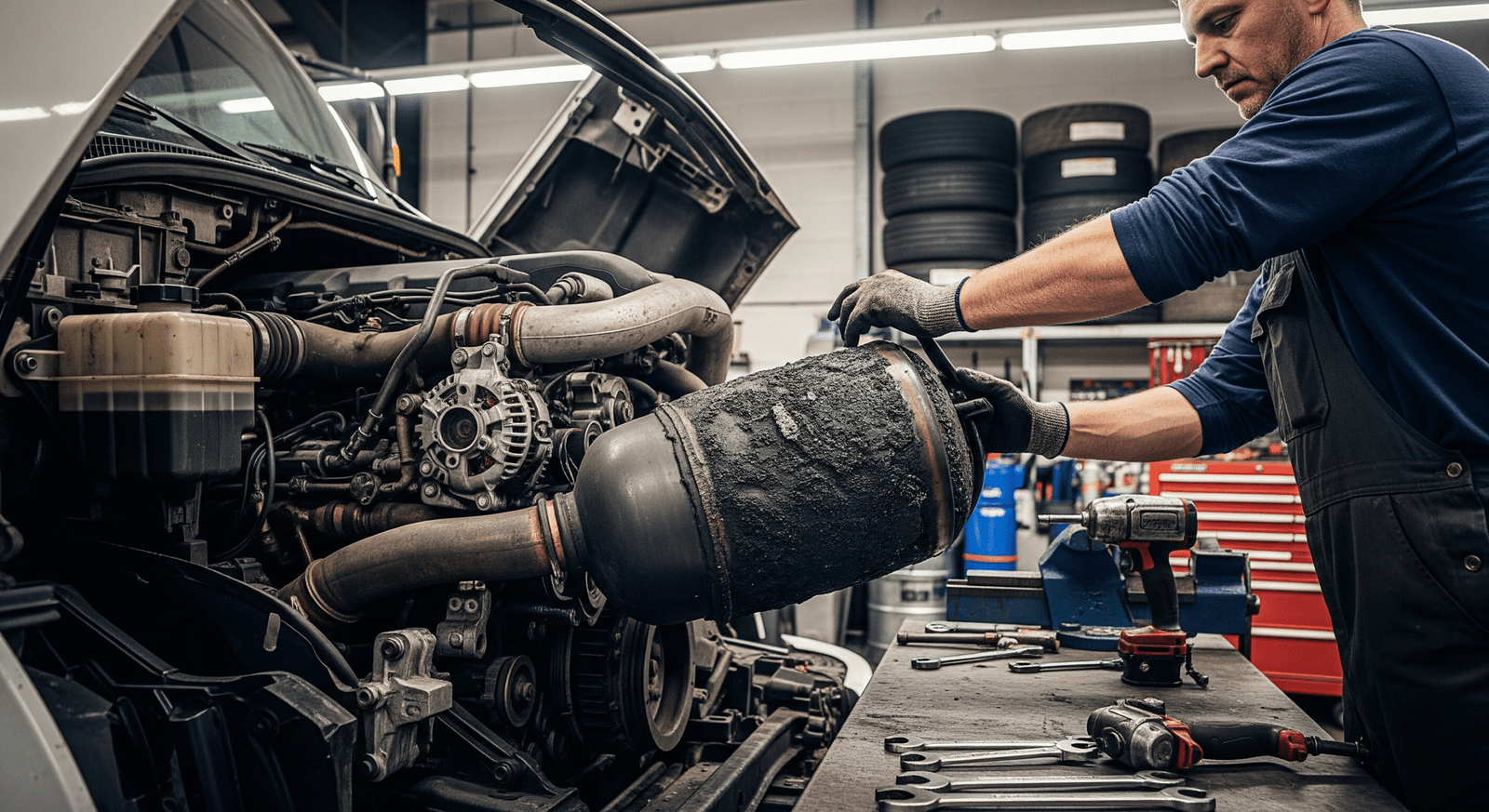
DPF and EGR delete refers to the removal or disabling of a diesel vehicle’s Diesel Particulate Filter (DPF) and Exhaust Gas Recirculation (EGR) system, along with reprogramming the engine’s computer to run without these components. Modern diesel engines include DPFs and EGR valves as emissions control devices the DPF traps soot particles in the exhaust, and the EGR recirculates a portion of exhaust gas back into the intake to reduce combustion temperatures and NOx emissions. These systems are crucial for meeting environmental regulations, but they can also introduce maintenance headaches and performance constraints.
This article explains what DPF and EGR deletes mean, why some owners consider doing it, the potential torque/power gains and fuel economy improvements, legal and mechanical risks, alternatives like cleaning or a Stage 1 remap, and expert advice on when a delete makes sense (or not).
What Are DPF and EGR, and Why Do Diesel Engines Have Them?
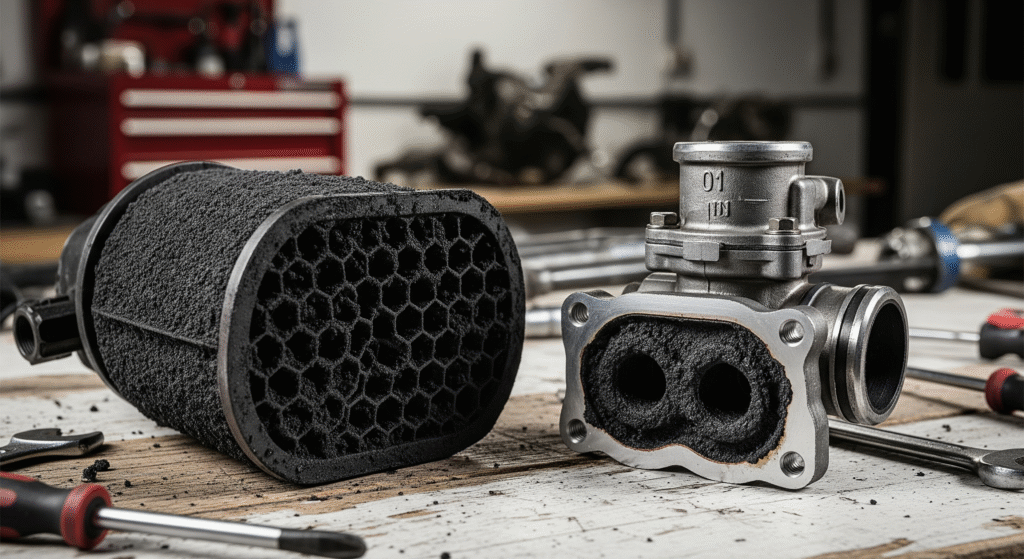
Diesel Particulate Filters and EGR systems are found in virtually all modern diesel cars and trucks because of strict emissions laws. The DPF is a filter in the exhaust designed to capture soot and particulate matter before they exit the tailpipe. Periodically, the vehicle performs a regeneration cycle to burn off the accumulated soot (often by injecting extra fuel to raise exhaust temperature and incinerate the soot). Without a DPF, diesel vehicles would spew thick black smoke and harmful fine particles.
The EGR system, on the other hand, is plumbed between the exhaust and intake. It redirects a controlled portion of exhaust gases back into the intake manifold to lower the peak combustion temperature, thereby reducing the formation of nitrogen oxides (NOx). NOx is a major pollutant targeted by regulations, so EGR helps diesel engines meet standards for cleaner air.
In summary, DPF and EGR are there to make diesels cleaner. However, they also introduce complexity: the DPF can become a bottleneck if it clogs up, and the EGR adds soot and carbon into the intake path over time. This is where the idea of a cleaning comes in. DPF and EGR delete means completely removing the DPF filter and disabling the EGR valve/system via hardware and software changes.
Typically this involves physically taking out the DPF (replacing it with a straight pipe or a special DPF delete kit) and blocking off or unplugging the EGR, then using specialized DPF and EGR delete software to update the engine control unit (ECU) so that it doesn’t look for those systems anymore. The ECU reprogramming is critical, without it, simply the DPF and EGR delete would trigger warning lights and limp mode. Properly done, a delete stops the car from injecting fuel for regens or opening the EGR, essentially making the engine run as if those emissions devices were never there.
Why Consider DPF/EGR Delete?
If DPFs and EGRs are meant to help the environment, why do so many diesel enthusiasts talk about deleting them? In practice, there are several common motivations for considering a DPF/EGR delete:
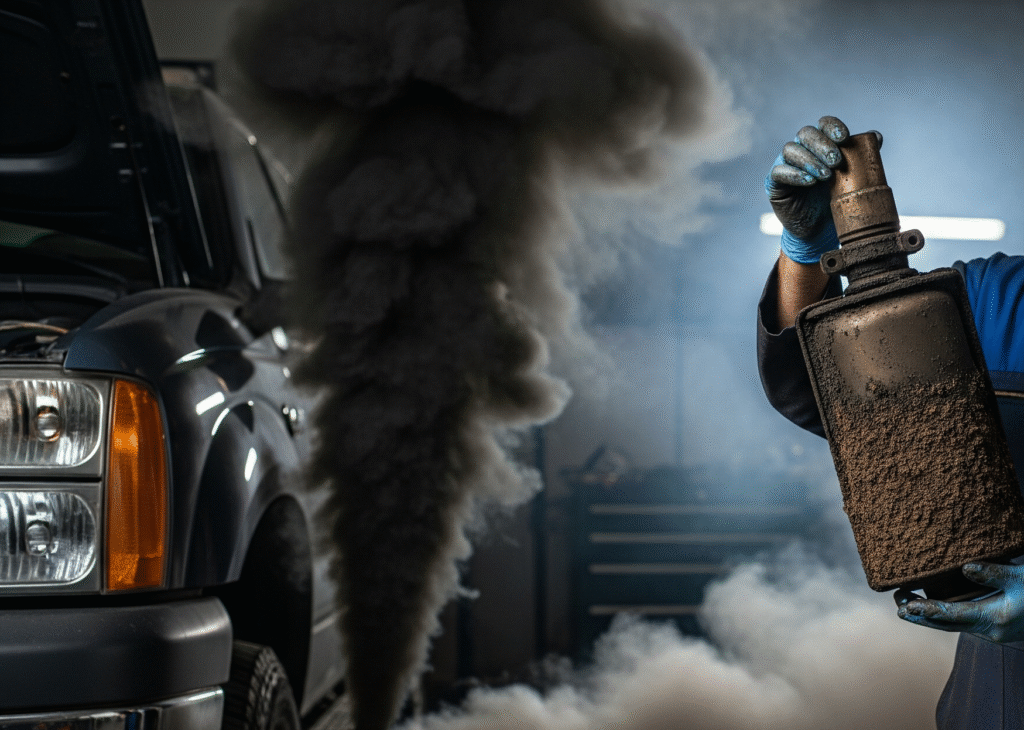
- Clogged or Failing DPF: Over time, the DPF can fill up with non-burnable ash or become so clogged with soot that regenerations no longer clear it. When a DPF is blocked, the vehicle often loses power, gets worse mileage, and may even enter “limp mode” (reduced power to protect the engine). Drivers see dashboard warnings (DPF or check-engine lights) and trouble codes indicating the filter is overloaded. A clogged DPF seriously impacts performance and fuel economy. Replacing a DPF is expensive – the part can cost anywhere from around $1,000 to $3,000 (or more in some trucks. Because of that high cost, some owners choose to remove the filter and remap the ECU instead of paying for a new DPF. In other words, they see a delete as a one-time fix to avoid recurring DPF headaches and expenses.
- EGR Valve Problems: The EGR system, while reducing NOx, recirculates sooty exhaust that causes carbon build-up in the intake manifold and on the EGR valve itself. It’s common for EGR valves to get stuck or clogged with carbon deposits over time. Symptoms include rough idle, reduced power, increased fuel consumption, and check-engine lights. A faulty EGR can also contribute to DPF problems – for example, if the EGR sticks open it can disrupt the combustion and increase soot, overwhelming the DPF with extra particulates. Repairing or cleaning a dirty EGR valve is another maintenance cost (not as high as a DPF, but still a couple of hundred dollars for parts or labor). To avoid these issues, many tuners simply disable the EGR through software and use a blocking plate (an EGR delete kit) to stop any exhaust flow. This prevents further carbon deposits and can cure certain performance issues caused by a bad EGR. In essence, deleting the EGR means one less component to fail or maintain.
- Restoring Lost Performance: Both a DPF and an EGR inherently restrict the engine’s efficiency a bit – the DPF causes exhaust backpressure and the EGR dilutes the fresh air charge with inert gas. When these systems malfunction (e.g. a full DPF or a stuck EGR), the impact on drivability is significant: owners experience sluggish acceleration, poor throttle response, and more frequent fuel consumption due to regens or inefficiencies. Many diesel enthusiasts consider a delete when they feel the car “just isn’t running like it should” because of these emission controls. For example, there are real-world cases where drivers got fed up with constant DPF regen cycles or power loss – in forums you’ll find stories like “after the third time my DPF warning came on and the dealer quoted me $2000 to replace it, I chose to have it removed and tuned out.” For such owners, the delete is an immediate cure to the nagging issues: no more regen cycles, no more worrying about a clogged filter or an EGR clogging up the intake.
- Cost Considerations: As mentioned, the cost of a DPF and EGR delete job can sometimes be less than the cost of replacing a failed DPF with a new one. A professionally done delete (including an ECU remap and the physical removal hardware) might run in the ballpark of $1,000–$2,000 for a typical car, though it varies by model and region. In one example, a VW Jetta TDI owner was quoted about $3,500 for a full DPF delete including labor and a performance tune. In another case, a complete EGR delete kit for a Ford truck might cost around $360 for parts, and about $1,500 total including installation by a mechanic. By contrast, dealership quotes for a new OEM DPF can be equally high or higher – it’s not unheard of to see $2,000–$4,000 quotes for DPF replacement on certain vehicles. This equation (high cost to fix vs. similar or lower cost to delete) makes deletion tempting, especially for vehicles out of warranty. Owners essentially ask: “Why spend a fortune repeatedly replacing or cleaning filters and valves, when I can remove them entirely?” For those planning to keep their vehicle long-term (and perhaps not subject it to emissions tests), the delete’s one-time cost can appear more cost-effective in the long run.
- Tuning and Performance Goals: Some diesel enthusiasts also pursue DPF/EGR deletes for the potential power gains and modifications beyond just fixing problems. Removing emissions restrictions is often part of going to a “Stage 2” tune or beyond. For example, on many turbo-diesel cars, you cannot safely increase fuel delivery or turbo boost too much with the stock DPF in place – you’d risk clogging or overheating it. By deleting the DPF and EGR, tuners have more headroom to add fuel and airflow and make more power. In off-road racing or sled-pulling trucks, deleting emissions equipment is common practice to extract maximum performance. Even on a street car, an owner might simply want the car to run cooler and have less complexity. They might believe (not incorrectly) that the engine breathes better without exhaust restrictions and dirty EGR gases, allowing it to run more “purely” and reliably (especially if the vehicle is used in conditions where emissions compliance isn’t a concern). In short, the typical reasons for a DPF and EGR delete boil down to: avoiding costly repairs, curing chronic clogging issues, and unlocking performance and efficiency that are otherwise hampered by these devices.
It’s important to note: While these motivations are understandable, deleting emissions equipment is often illegal on public roads (more on that in the conclusion). Nonetheless, in practice many off-road or competition vehicles and yes, some road vehicles whose owners accept the risk have had their DPF and EGR removed. Now, let’s look at what kind of results one can expect when these systems are deleted and properly tuned out.
Performance & Efficiency Gains After DPF/EGR Delete
One of the biggest appeals of a DPF and EGR delete is the promise of a more powerful and fuel-efficient vehicle. By the DPF and EGR delete, you eliminate two sources of flow restriction in the engine’s breathing. Exhaust gases can exit more freely without pushing through a clogged filter, and only clean air (no recirculated exhaust) enters the combustion chambers. The immediate results that users often report include a sharper throttle response, reduced turbo lag, and the engine revving more willingly. But what about the quantifiable gains in power or fuel economy? Here’s what you can typically expect:
- Increased Horsepower and Torque: Disabling emissions restrictions can yield significant power gains when paired with the appropriate ECU tuning. According to ReverseEngineer.Net’s own experts, removing the DPF/EGR and adjusting the ECU can boost engine output by around 15–25% in many cases This is a considerable jump for instance, a diesel making 150 hp stock might see on the order of 180–190 hp after a delete and remap. The exact gain depends on the engine and how aggressive the tune is, but even without an aggressive tune, just the reduction in backpressure can add noticeable power. With the DPF gone, the turbo can spool up faster (since exhaust flow is less impeded), allowing higher boost at earlier RPM. Eliminating the EGR means the intake is filled only with oxygen-rich air rather than a mix of air and inert exhaust – this can improve combustion efficiency and slightly increase power especially at lower RPM where EGR is usually active. In performance tuning circles, a DPF delete is often considered a prerequisite for reaching the higher power “stages” on diesel engines. For example, on a common rail turbo-diesel, doing a DPF delete alongside a Stage 2 tune can unleash much more torque than a Stage 1 tune with the DPF still in place. In summary, expect a solid bump in torque and horsepower after a proper delete, which translates to stronger acceleration and sometimes even improved towing capability for trucks.
- Better Fuel Economy: Many diesel owners notice improved fuel consumption after a DPF and EGR delete (again, assuming the ECU is properly tuned). There are a few reasons for this. First, the engine no longer needs to periodically dump extra fuel to burn off the soot in the DPF, which can actually hurt MPG when these regeneration cycles occur frequently. Second, with less exhaust restriction and more efficient combustion (since there’s no EGR dilution), the engine can produce the same power with less fuel. Real-world reports vary, but 5-10% gains in MPG after deletes are commonly cited. These improvements make sense: Removing a clogged DPF that’s causing excessive backpressure can significantly reduce engine workload, especially at cruising speeds. Similarly, disabling the EGR means the engine isn’t running with partially burned gases inside, resulting in leaner, more complete fuel burn. Of course, your results may vary; Much depends on your driving style and how clogged or inefficient the systems were beforehand. However, it’s not uncommon to see reports of 2-5 more MPG (miles per gallon) or a few more kilometers per liter (km per gallon) after a clean. At the very least, you won’t be burning extra diesel fuel to clean a filter anymore.
- Reduced Maintenance and Fewer Regens: A more indirect benefit, but one that matters to owners, is the reduction in maintenance hassles. With the DPF gone, you’ll never have to deal with forced regeneration cycles, DPF warning lights, or limp mode due to a saturated filter. Similarly, deleting the EGR means no more intake carbon cleaning, no stuck EGR valves, and usually cleaner engine oil (since less soot makes its way into the crankcase). Over time, this can translate into longer engine life in certain aspects. For example, less oil dilution and fewer instances of high exhaust heat from regens. However, it’s worth mentioning that some trade-offs come with these gains. The absence of a DPF means the car will emit a bit of visible smoke under hard acceleration (that black diesel soot), and the exhaust will smell stronger (you might notice a raw diesel smell, especially if the catalytic converter is also removed). Also, without EGR, NOx emissions will increase significantly, which is why DPF/EGR deletes are intended for off-road use only from a legal standpoint. In terms of engine operation though, many tuners feel an engine runs cleaner internally without EGR gunk, which could reduce issues like intake clogging or even extend turbo life (no soot buildup on the turbine). There’s some debate, as completely removing these systems can have other impacts (like slightly higher combustion temperatures without EGR, or in rare cases turbo overspeeding without DPF backpressure), but a well-done tune accounts for those. Overall, owners who delete often report a more healthy feeling engine: smoother power delivery and consistency, as if the engine can breathe freely.
In short, the performance and efficiency gains from a DPF and EGR delete can be substantial. You get back power that was robbed by choked filters and detuned settings, and you usually save fuel in the process. Independent tests and user experiences have documented these benefits, which is why, from a purely mechanical perspective, a delete can sound very attractive.
A source even highlights that removing the DPF/EGR can improve engine power, acceleration, and reduce ongoing DPF maintenance costs essentially making the procedure worthwhile from a performance standpoint. However, Before deciding to delete, it’s crucial to consider the alternatives and whether a delete is appropriate for your situation. In many cases, you can achieve a satisfactory outcome without fully removing these emissions systems. Let’s explore those alternatives next.
Alternatives: Cleaning, Repairs, and Legal Tuning Strategies
DPF and EGR delete, isn’t the only solution to the problems we discussed. In fact, because of the legal restrictions, many diesel owners seek out ways to fix or improve their cars without deleting these components. Here are some key alternatives to consider:
1. Professional DPF Cleaning: If your diesel particulate filter is clogged or causing issues, one option is to have it professionally cleaned or reconditioned rather than removing it. Many service centers offer DPF cleaning using specialized machines that blow out the soot and ash (often using high-pressure air and heat) to restore the filter’s function. For example, heavy-duty truck service shops use machines that can clean a DPF and restore it to like-new flow in about 20–30 minutes.
Regular cleaning (every 100k-150k miles for cars, or as needed) can prevent the need for costly replacement. There are also on-vehicle forced regeneration services where a technician uses a scan tool to trigger a regen under controlled conditions to burn out soot. If ash accumulation is the issue (ash is a byproduct of burning oil additives and cannot be burned off), off-car cleaning is the solution. While not cheap, cleaning a DPF typically costs a few hundred dollars significantly less than a new DPF or a delete job and keeps your vehicle emissions-compliant.
2. DPF Cleaner Additives: A DIY adjunct or alternative to professional cleaning is using a DPF cleaner additive in your fuel. These additives (from companies like Rislone, Liqui Moly, etc.) are formulated to help dissolve soot or assist the regeneration process. For instance, Rislone’s Diesel Particulate Filter Cleaner is added to the fuel tank and claims to reduce soot and promote more complete DPF burn-off during normal driving.
Such additives can be effective if your DPF is marginally clogged or you do a lot of city driving they help the regen be more successful by lowering the ignition temperature of soot or cleaning other parts (injectors, etc., to ensure proper combustion). They are relatively inexpensive steps to try before considering removal. While they won’t fix a severely blocked filter, they can prevent issues from getting to that point.
Likewise, keeping your engine in good tune (proper fuel injectors, using the right low-ash engine oil, regular Italian tune-ups on the highway to get the exhaust hot) are all preventative alternatives to extend DPF life. In short, if your vehicle’s use case isn’t suitable for a DPF (e.g. lots of short trips), then proactively using cleaners or scheduling periodic highway runs can save you from a delete or replacement.
3. Stage 1 Remap (Legal Tuning): If your primary goal is to gain power or improve drivability, a Stage 1 ECU remap is a highly recommended alternative to a delete. Stage 1 tuning is typically a software recalibration of the engine that stays within the tolerances of stock hardware (meaning you retain the DPF, EGR, catalytic converter, etc.).
A good Stage 1 tune on a turbo-diesel can often yield 20% or more increase in horsepower and torque without removing any emissions equipment. For example, many 2.0L TDI engines (140 hp stock) can be safely tuned to ~170+ hp with all factory systems intact. This level of tune usually avoids generating excessive soot (so the DPF can handle it) and stays within EGT (exhaust temperature) limits so as not to over-stress the DPF during regens.
The result is a noticeable performance boost and sometimes even a slight fuel economy improvement, all while keeping your car street-legal. Of course, the tune must be done by a capable professional who understands the constraints but companies like ReverseEngineer.Net specialize in exactly this kind of optimization. The advantage is you get a faster, more responsive car without the downsides of a delete (no legal issues, no increased emissions).
In many cases, enthusiasts try a Stage 1 tune first and find it’s sufficient for their needs. Only if they chase very high power (or if the DPF/EGR give trouble) do they consider going further. In summary, a Stage 1 remap is a safe first step that delivers a lot of the feel of a performance upgrade, potentially rendering a delete unnecessary.
4. Component Replacement: As a last alternative, you can always replace the problematic part with a new one. This is the straightforward but sometimes costly solution. For instance, if your DPF is irreparably clogged, buying a new OEM (or high-quality aftermarket) DPF will solve the issue and reset the clock on your emissions system. Similarly, a new EGR valve or cooler will ensure the emissions system functions like new. The upside is you maintain compliance and the original functioning of the engine as designed.
The downside, of course, is cost as we discussed, DPF units can be very pricey, and even EGR assemblies can be a few hundred dollars. There’s also the risk that the issue might recur (e.g. a new DPF will eventually also clog if the underlying cause such as lots of city driving or a faulty injector isn’t addressed).
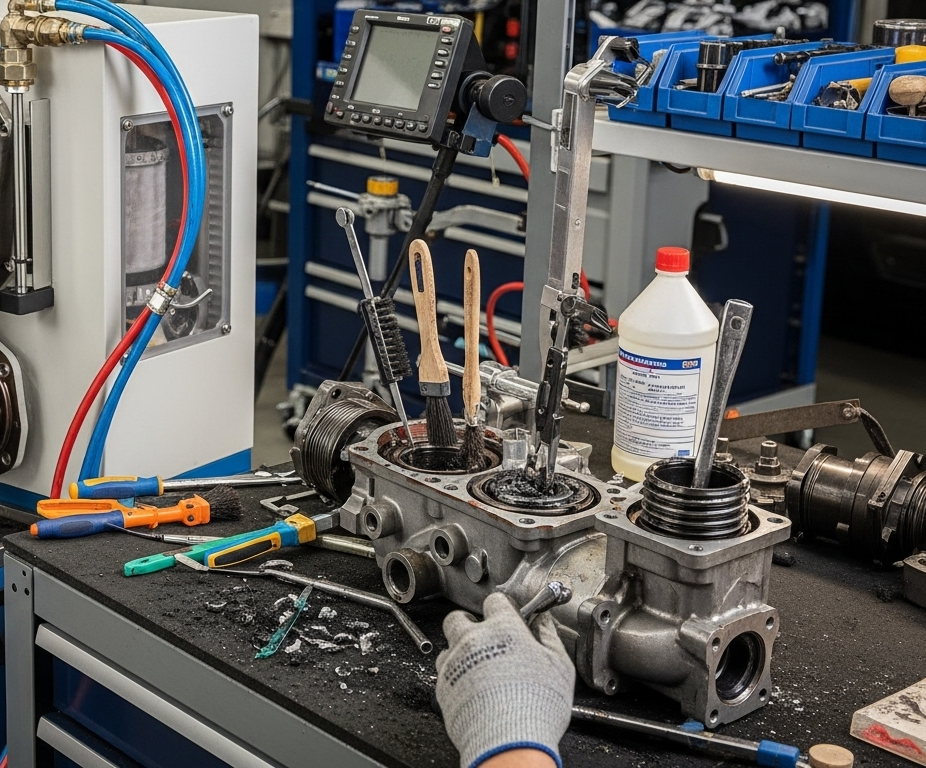
For a daily-driven street vehicle, usually the best path is to try cleaning or a mild tune first before jumping to a delete. As one industry expert put it,
“You don’t have to be a mechanic to keep your diesel vehicle’s DPF functioning properly… Our solution restores power, improves fuel economy, reduces regen cycles, and extends DPF life all for significantly less than a mechanical repair or replacement.”
This quote (from a manufacturer of a DPF cleaner additive) highlights that there are indeed less extreme measures to resolve DPF/EGR issues without deleting them. Ultimately, deleting should be a last resort for most or reserved for off-road competition vehicles given the implications.
Expert Advice on When a Delete Makes Sense (and When It Doesn’t)
So, should you do a DPF and EGR delete?
The answer depends on your use case, local laws, and goals. As a team of tuning experts at ReverseEngineer.net, our advice is to carefully consider the trade-offs before going down the delete route. There are scenarios where a DPF/EGR delete makes sense: for example, if you have an older diesel that’s no longer under emissions warranty, used exclusively off-road or in racing, and you’re facing prohibitively expensive repairs (like a $5,500 DPF replacement on a vehicle only worth $10,000).
In such cases, and in motorsport applications, deleting the DPF/EGR can be a practical solution to keep the vehicle running optimally (albeit for off-road use only in official terms). The performance gains and resolution of chronic issues can indeed extend the useful life of a diesel vehicle that might otherwise be retired due to clogged emissions gear.
Expert tip: If your goal is reliability and mild performance, keep the DPF and EGR if they’re working properly, and opt for a quality tune instead. Only consider a delete if you fully understand the consequences and have no other viable option (or you’re building a track-only toy). Even then, make sure a reputable tuner handles the ECU programming improper delete software can harm your engine. Also, retain your old parts in case you need to reverse the deletion in the future (for instance, to sell the car or move to an area with inspections, yes, a DPF delete can be reversed by re-installing a filter and updating the ECU, but it’s extra cost and work).
Finally, remember that every car and situation is different. It’s wise to consult with experts who can evaluate your specific case. At ReverseEngineer.net, we offer consultative guidance we’ll honestly tell you when a DPF/EGR delete is beneficial and when you’re better off with alternatives like a Stage 1 remap or a cleaning service. Our goal is to help you get the most out of your diesel safely and legally. Sometimes the cool modification isn’t the right choice for a street-driven vehicle. We encourage enthusiasts and professionals alike to weigh the pros and cons outlined above. Yes, DPF and EGR deletes can unlock power and solve annoying issues like filter clogging or warning lights, but they come with significant responsibility.

If you’re unsure what’s best for your diesel, feel free to contact ReverseEngineer.net for expert advice. We can help diagnose your DPF/EGR problems and recommend the optimal path whether it’s a cutting-edge legal tuning solution or, if appropriate, an off-road delete with the proper supporting mods. The key is making an informed decision. With the information in this article, you have a comprehensive look at what DPF/EGR deletes entail.
Let's Work Together
Need Professional Assistance with Reverse Engineering or Cybersecurity Solutions? Our Team is Ready To Help You Tackle Complex Technical Challenges.