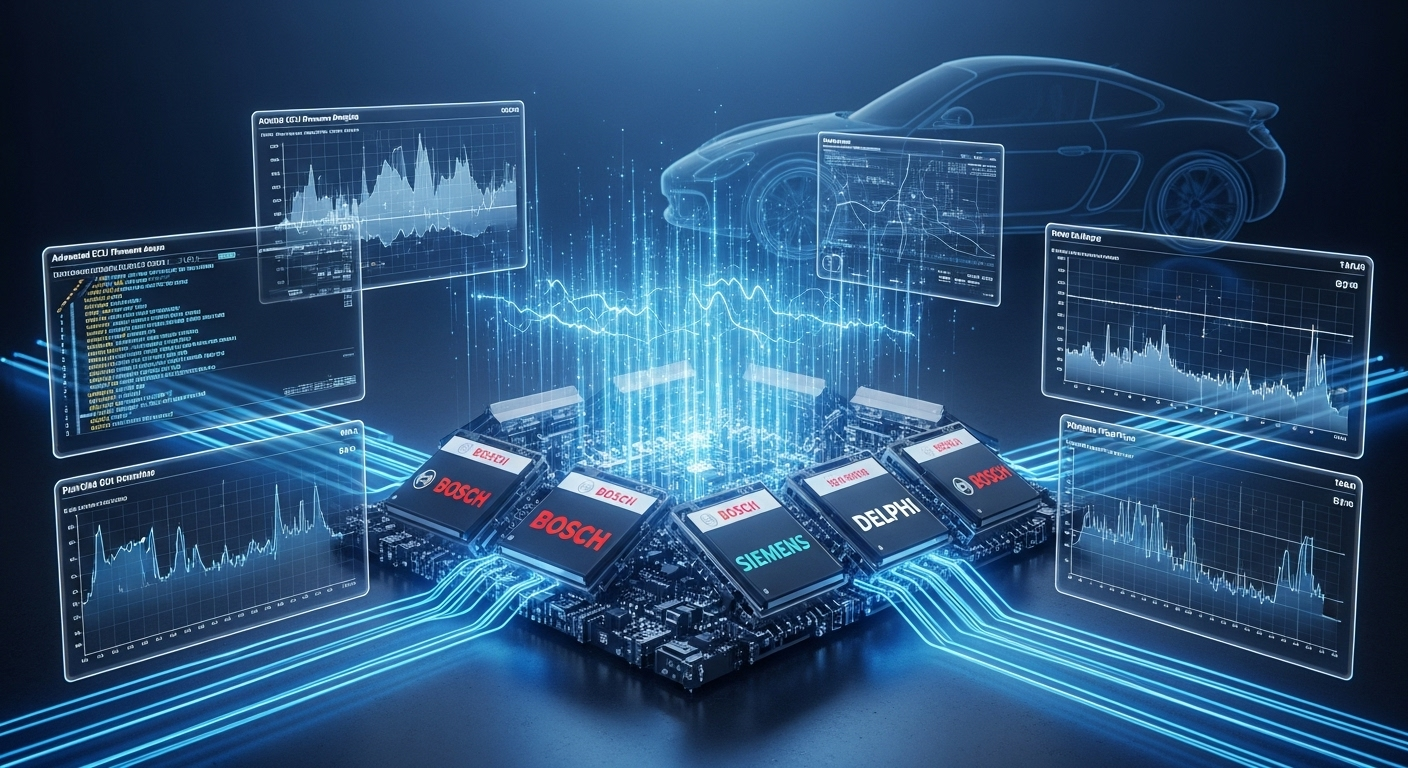
Popular ECU platforms and ECU tuning modifications offer significant performance gains to car enthusiasts.
In the world of ECU firmware modifications, specialized updates that provide increased performance or a unique driving experience are quite popular. According to ReverseEngineer.Net, Stage 1 remapping, multi map modification, and launch control additions are particularly popular with ecu tuners and drivers, particularly for some popular engine control units (e.g., Bosch EDC17, Bosch MED17, Siemens/Continental SIMOS18, Delphi DCM6.2, etc.).
Below, we list the most Popular ECU Models, the effective tuning modifications associated with each, and the reasons for their popularity:
Bosch EDC17 ECU | DPF and EGR Delete (Emission System Optimization)
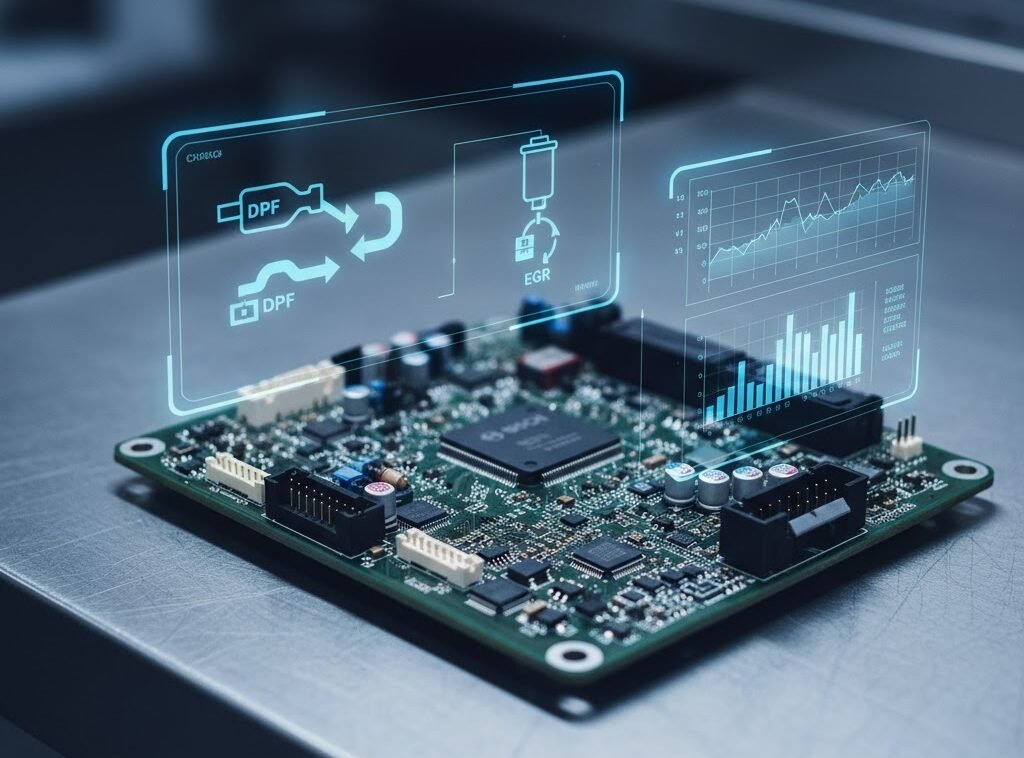
Ecu Tuners frequently request software deactivation of the diesel particulate filter (DPF) and exhaust gas recirculation (EGR) systems in the EDC17 series of ECUs, commonly found in many modern diesel vehicles. This ECU manages the high-pressure fuel injection and emissions systems in common-rail diesel engines; removing the DPF/EGR restrictions that limit power in factory settings unlocks the engine’s true potential. Consequently, removing emissions restrictions in vehicles equipped with the EDC17 has become an extremely popular modification, as it can provide up to a 15–25% increase in engine power and improved fuel economy while addressing clogging issues.
In addition to performance benefits, professional ECU reverse engineering of the Bosch EDC17 also allows tuners to fine-tune important subsystems such as injection timing, turbo boost control, and rail-pressure calibration. By analyzing the firmware structure and map layout, experienced engineers can safely disable the DPF and EGR logic without triggering diagnostic trouble codes (DTCs) or limp-mode activation. This precision ensures that the engine continues to operate within stable parameters while gaining the full advantage of improved combustion efficiency. At ReverseEngineer.net, such DPF and EGR delete projects are executed through checksum-verified firmware modification, ensuring consistent reliability, compliance with hardware sensors, and optimized torque delivery across the entire RPM range.
Bosch MED17 ECU | Launch Control Integration
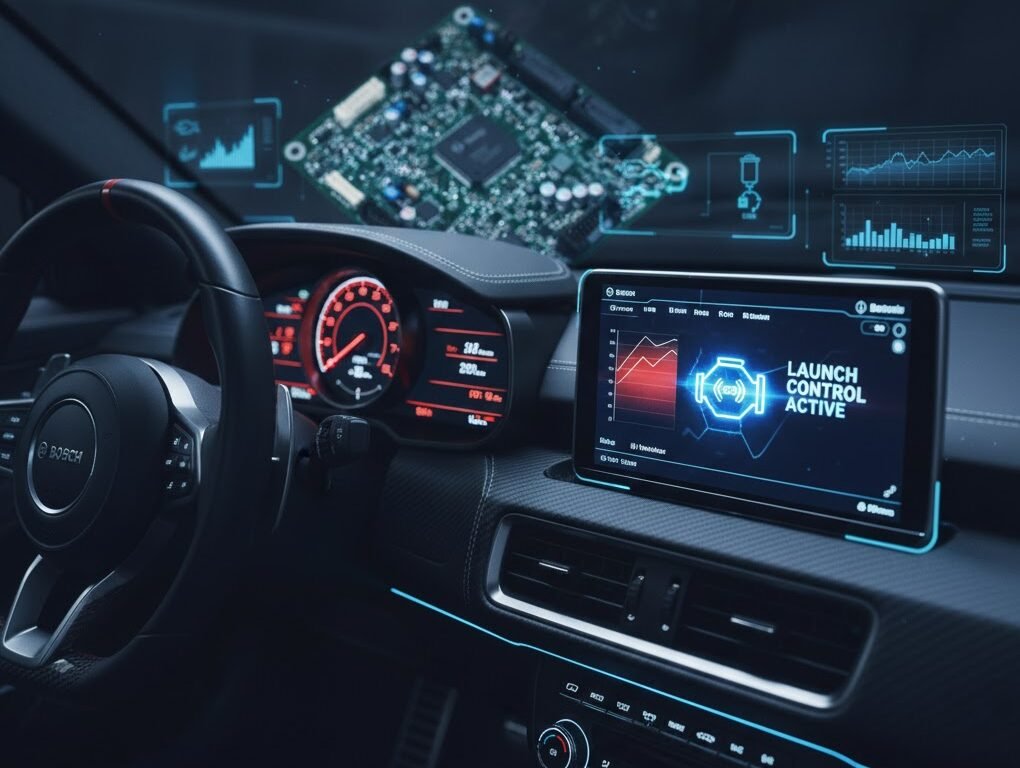
The Bosch MED17 ECU, used in many turbocharged gasoline vehicles throughout the late 2000s and 2010s, has been decrypted by tuners, despite its advanced security features, allowing for performance updates. Reverseengineer.net. Adding launch control to this platform via software is highly sought after. Many performance cars don’t come with launch control from the factory; adding this feature using tuners’ special coding on the MED17 allows the car to launch from a standstill with maximum traction, improving 0-100 km/h acceleration and enabling exciting race-style starts. Launch control software is a valuable modification for vehicles with TFSI engines like those based on the MED17, providing an easily accessible performance boost.
Through ECU reverse engineering and custom firmware calibration, the MED17 launch control feature can be tailored to specific vehicle configurations, including different clutch types, turbo response curves, and tire traction characteristics. Engineers analyze the torque intervention maps and ignition-cut parameters to synchronize throttle, boost, and clutch engagement timing for the most effective launch sequence. This ensures not only maximum acceleration but also consistent performance without stressing drivetrain components. At ReverseEngineer.net, MED17 tuning involves checksum correction, anti-lag coordination, and dynamic rev-limit calibration to deliver OEM-grade reliability with motorsport-level responsiveness a balance highly appreciated by both professional tuners and performance-focused drivers.
Bosch ME7 ECU | No-Lift Shift (Fast Gear Changes Without Throttle Release)
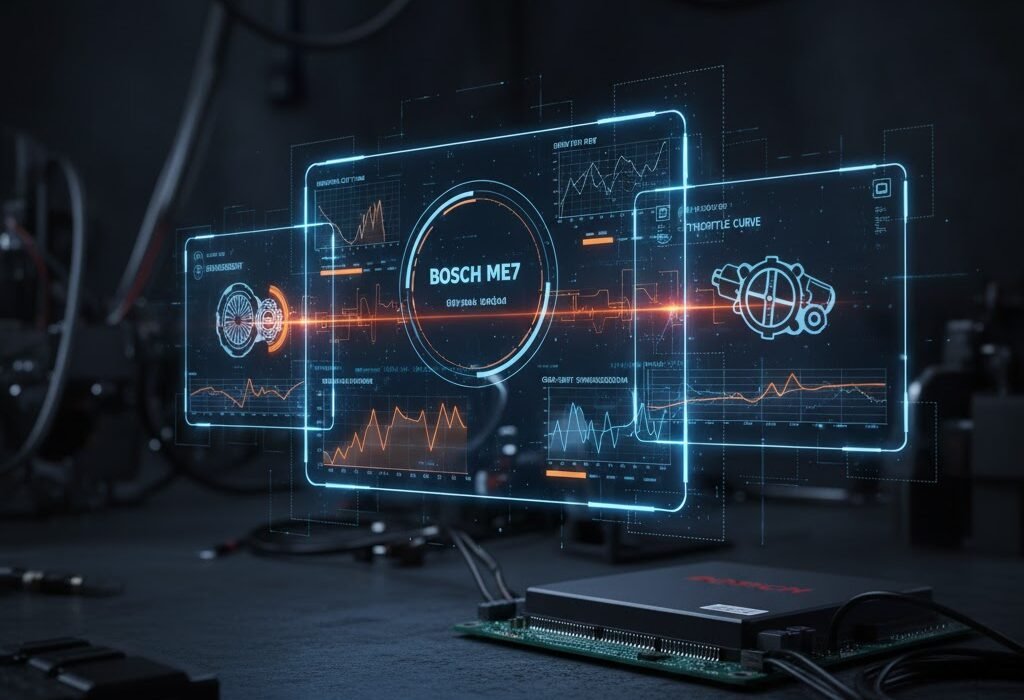
The ME7 series is an older-generation Bosch ECU used in many performance-oriented gasoline engines (e.g., VW/Audi 1.8T) in the late 1990s and early 2000s. Its relatively simple architecture made it a training ground for the ECU tuning community, and even amateur ECU tuners were able to deeply customize the ME7 software and later add functions such as no-lift shift. No-lift shift allows upshifting in a manual transmission without taking their foot off the accelerator.
The ECU ensures safe shifting by momentarily cutting and re-applying the ignition or fuel while the clutch is engaged and shifting. This maintains turbo boost during gear changes in turbocharged vehicles, shortening shift times and maintaining uninterrupted acceleration. No-lift shift, added later via software to ME7-based vehicles, is a popular modification among enthusiast drivers because it gives the car a racecar-like character and offers additional performance at no cost.
Implementing No-Lift Shift (NLS) on the Bosch ME7 ECU involves precise calibration of ignition-cut thresholds, clutch switch logic, and throttle response synchronization to achieve seamless gear transitions. Professional tuners analyze the firmware’s ignition and fuel control routines to integrate a temporary torque reduction strategy that prevents drivetrain shock while sustaining turbo boost pressure. This modification not only enhances driving dynamics but also improves gear change consistency during high-load acceleration. At ReverseEngineer.net, ME7 firmware is reverse-engineered and remapped with exact timing and torque references, ensuring that every NLS event occurs smoothly without misfire or boost drop, transforming classic VW/Audi turbo engines into responsive, track-ready machines with refined control and durability.
Continental/Siemens SIMOS18 ECU | Map Switching
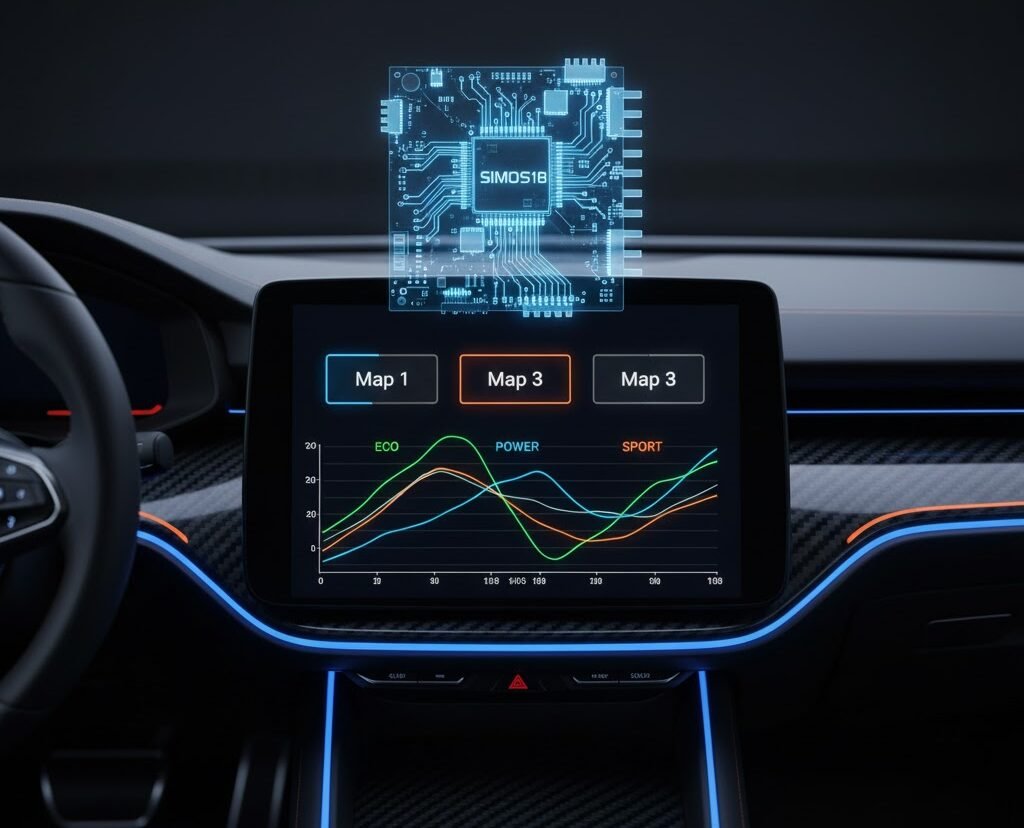
The SIMOS18 ECU is a control used in popular Volkswagen Group performance models such as the Golf R, Audi S3, Seat/Cupra, and Skoda Octavia RS. The map switching (multi program) feature, introduced by tuners to this unit, allows the driver to instantly switch between different engine maps with a single button or combination. For example, by creating multiple software slots within the same vehicle, it is possible to select profiles such as different turbo boost levels, ignition timings for different octane fuels, valet mode, or limited power mode to reduce thermal load.
This multi map modification developed for the SIMOS18 is highly sought after by performance enthusiasts, as the flexibility of hosting multiple programs in one ECU allows the vehicle to be customized to its specific usage scenario (daily driving vs. performance driving).
Achieving reliable map switching on the Continental/Siemens SIMOS18 ECU requires in-depth firmware analysis and modification of its internal calibration referencing system. Engineers at ReverseEngineer.net perform ECU reverse engineering to identify the map indexing logic and seamlessly integrate multiple calibration sets without triggering checksum or immobilizer errors. The result is a stable, factory-grade implementation where drivers can switch between performance, economy, or race modes through the cruise control stalk, drive mode button, or pedal combination without reflashing the ECU. Advanced implementations even include adaptive logic that automatically adjusts maps based on fuel quality, intake air temperature, or knock activity, offering a level of versatility and control previously reserved for high end motorsport systems.
Delphi DCM6.2 ECU | Torque Limiter Removal and Fuel Optimization
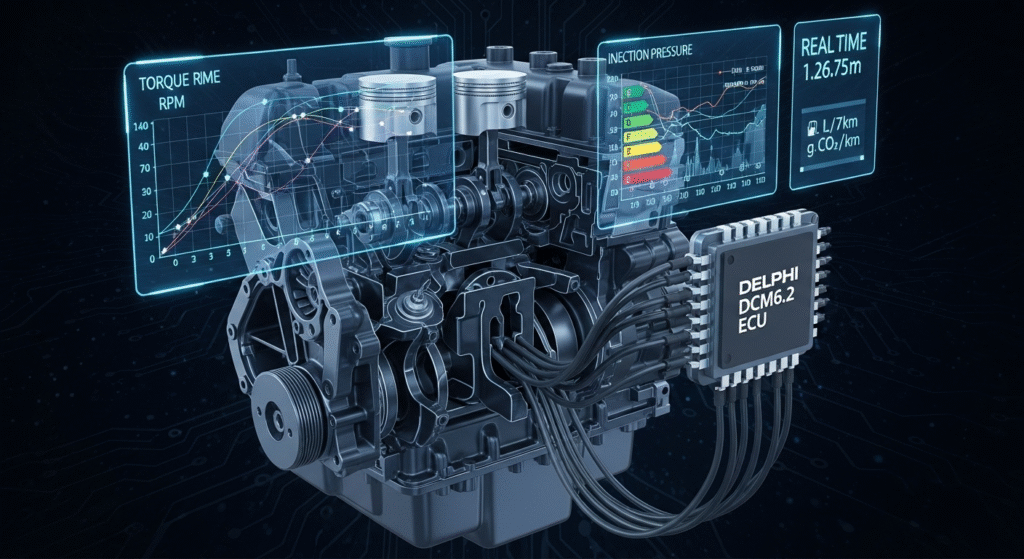
The Delphi DCM6.2 family is an ECU used in many modern diesel vehicles, particularly Peugeot, Citroën, Renault, Ford, and Volvo, and is factory-programmed to comply with emissions standards. The factory software in these units includes torque limiters and rich mixture settings that prevent the engine from fully utilizing its full potential.
Professional chip tuning in the DCM6.2 not only removes these torque limitations, but also optimizes injection pressure and air-fuel maps, resulting in increased performance and engine efficiency. With properly implemented software, it is possible to reduce fuel consumption by 10–15% while increasing engine power and torque by approximately 15–20%. This “economic performance”focused modification is particularly valuable for long-distance drivers, as it provides the extra power needed for both fuel savings and safe overtaking. In addition, these improvements made to DCM6.2 have become popular among users, as the engine’s torque curve is spread to lower revs and the emission systems are optimized, reducing chronic problems such as DPF clogging and EGR valve failures.
When performing torque limiter removal and fuel optimization on the Delphi DCM6.2 ECU, the process involves more than simply increasing fuel or boost values it requires precise recalibration of torque request tables, smoke limiters, and injection timing synchronization. Advanced ECU reverse engineering allows engineers at ReverseEngineer.net to identify internal torque modeling structures and modify them in harmony with transmission and turbo control logic.
This ensures that the increased performance remains smooth, efficient, and mechanically safe under varying load conditions. Additionally, the refined calibration enhances throttle response and drivability while maintaining stable exhaust gas temperatures, which is especially critical for long-haul diesel vehicles. The result is a durable, well-balanced tune that provides measurable gains in both performance and efficiency without compromising engine longevity or reliability.
In the modern era of ECU reverse engineering and custom ECU tuning, firmware-level optimization has become the foundation of true automotive performance. At ReverseEngineer.net, our engineers go beyond traditional remapping we analyze and decrypt ECU architectures at the binary level, uncovering every parameter that controls combustion, torque delivery, and power distribution. From Bosch EDC17 and MED17 to Continental SIMOS18, our expertise ensures precision tuning that transforms stock vehicles into high-performance machines while maintaining OEM-level safety and reliability.
Professional ECU Reverse Engineering and Custom Remapping
Through advanced firmware disassembly, map definition, and checksum-corrected reprogramming, the ReverseEngineer.net team delivers both performance and precision. We specialize in a wide range of ECU families, including Bosch, Siemens/Continental, Delphi, Denso, and Marelli performing comprehensive services such as Stage 1–3 tuning, immobilizer bypass, speed limiter removal, launch control integration, multi-map configuration, and secure firmware recovery. Each project is carefully validated to ensure long-term durability, emission-system stability, and optimal power delivery across all operating conditions.
Whether your goal is to achieve maximum horsepower, fuel efficiency, or motorsport-level response, our reverse engineering expertise ensures measurable results backed by data-driven calibration.
Ready to unlock the full potential of your ECU?
Contact ReverseEngineer.net today to discuss your project with our technical team and experience professional grade ECU tuning engineered for performance, reliability, and precision.
Let's Work Together
Need Professional Assistance with Reverse Engineering or Cybersecurity Solutions? Our Team is Ready To Help You Tackle Complex Technical Challenges.