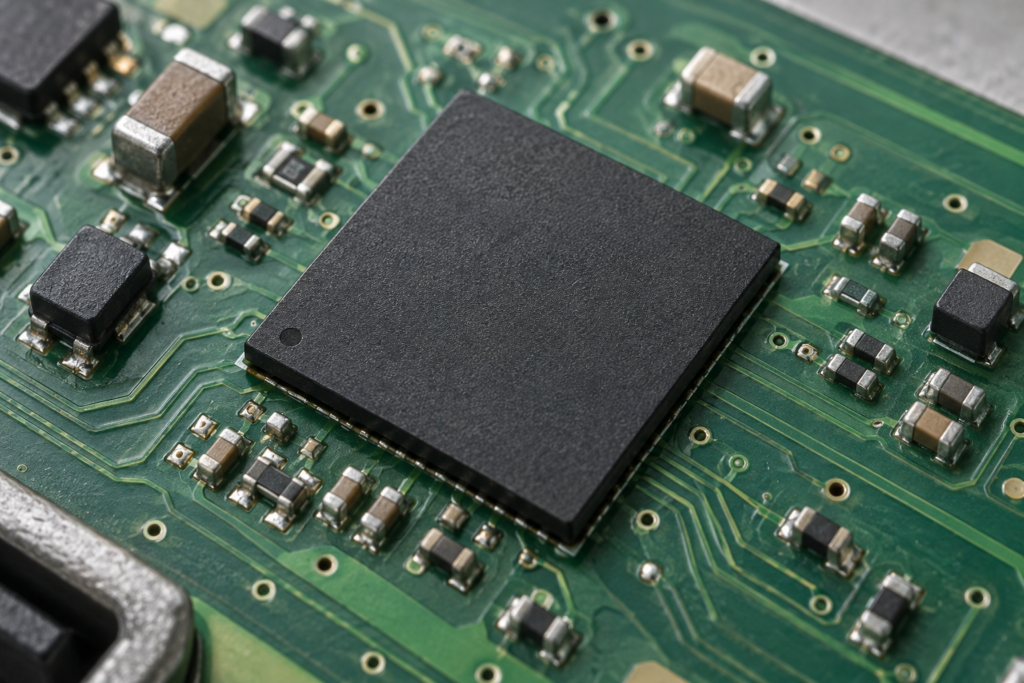
A Toyota Denso ECU described only as “RH850” is not identified well enough to choose a recovery method, order an emulator or promise a complete backup. The processor family is a starting point. The full device code, package, board implementation, available programming interface and current access state determine whether a proposed operation is technically credible.
For ECU remanufacturers and tool developers, the expensive problem is often a mismatch between these layers: the programmer supports a processor, but the assembled ECU cannot be reached in the required state; a file has the expected length, but its address coverage is unknown; or a replacement board carries a related device with different requirements. Reverse engineering should resolve these dependencies before a destructive operation becomes the next diagnostic step.
A real recovery question illustrates the identification gap
In a Renesas Engineering Community discussion about R7F701216, a user reported writing an incorrect file to a Toyota ECU and losing the ability to restore the original through OBD. The question was whether purchasing an IE850 emulator would provide direct access. Renesas staff instead pointed to serial programming support and the relevant connection documentation. The exchange identifies a useful engineering question; it does not establish that an arbitrary locked production ECU can be recovered with an emulator.
That distinction matters commercially. Purchasing hardware before establishing the target configuration can turn one unresolved ECU into an equipment experiment. An initial investigation should produce a device-specific access assessment: what is positively identified, which interface is supported, what the board exposes and which restrictions remain unresolved. A supplier should be able to explain those boundaries before quoting a guaranteed programming result.
Record the complete device identity, not just RH850
Renesas lists R7F701216EABG#AC0 as an RH850/E1M-S2 engine-control microcontroller with a G3MH main CPU, 4096 KB program memory, 64 KB data flash and a 252-terminal FBGA package. Those are attributes of that listed part. They must not be copied into an analysis of every Denso ECU carrying an RH850-family device.
The intake record should preserve the complete marking as photographed, including uncertain characters, plus the ECU assembly number, board revision and diagnostic software identifiers. A readable photograph is better evidence than a manually shortened part number. Supplier-specific markings need their own identification work; resemblance to a catalogue device is a hypothesis until package, memory and documented behavior corroborate it.
Cross-check independent identifiers. A housing label can survive a board replacement, and a software identifier may have changed during a previous programming attempt. If the board, file and diagnostic report appear inconsistent, retain all three rather than selecting whichever makes the intended tool profile fit. The inconsistency may be the most valuable clue in the project.
Separate chip support from assembled-ECU access
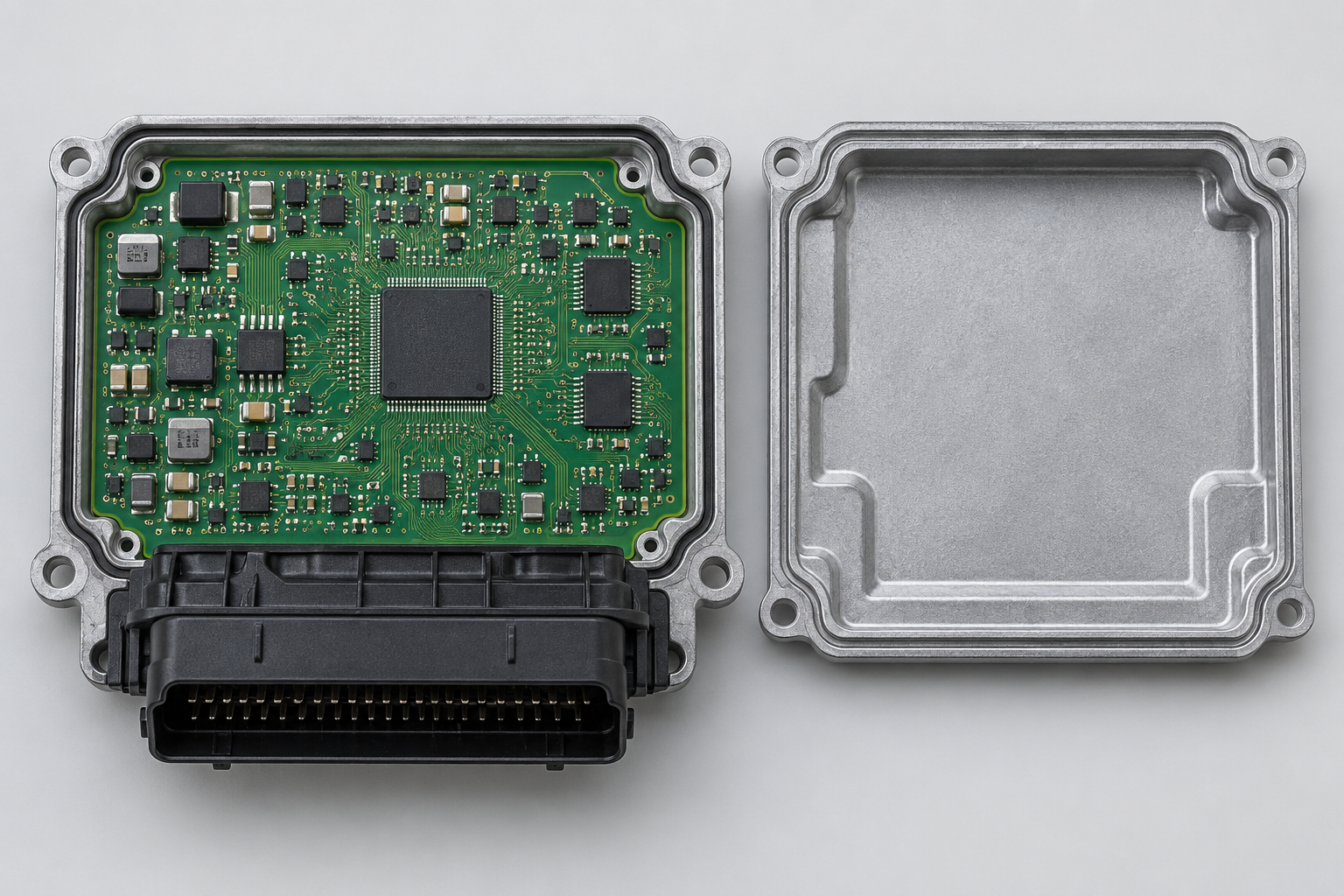
The Renesas Flash Programmer supported-device list provides a versioned reference for device and interface support. It should be read alongside the installed software version and the exact target entry. A family name on a product page is weaker evidence than a matching entry in the applicable support matrix.
Even confirmed device support leaves board questions open. The required signals may be routed to inaccessible pads, shared with other components or affected by pull resistors and power sequencing. A connection diagram intended for a bare microcontroller or development board does not establish an ECU connector pinout. The engineering task is to map the documented requirements onto the actual circuit without assuming that a convenient test pad serves the desired function.
Renesas publishes recommended circuits for connecting its flash programmers. These are a reference for evaluating an implementation, not permission to transplant another ECU’s wiring. For a commercial investigation, the useful output is an annotated connection assessment with evidence for each signal and a list of unresolved dependencies.
Treat debug, serial programming and vehicle diagnostics separately
An emulator, a serial flash programmer and a vehicle diagnostic tool solve different interface problems. The fact that one route stops responding does not establish the state of the others. Equally, a supported programming interface does not prove that arbitrary memory readback is available on the configured production device. The allowed operations must be established for the exact route and target state.
A meaningful test record distinguishes no electrical activity, activity without a recognizable response, device identification, an explicit rejection and a completed operation. These outcomes point to different next steps. Repeatedly changing the selected ECU profile after a silent failure loses information unless the physical conditions and communication trace are controlled. An error message should remain attached to the operation that produced it, not reduced to “the chip is locked.”
Where access restrictions are involved, a proposal should identify the evidence needed to assess them and any credentials or authorized manufacturer procedures supplied by the customer. It should not promise universal unlocking. An investigation can still be valuable if it rules out an unsuitable route and preserves a viable recovery path before irreversible changes are made.
Build a memory coverage ledger before calling a file a backup
A file name such as full.bin does not describe its contents. Record the acquisition method, source ECU, software version, byte length, cryptographic hash and any address ranges reported by the tool. Then classify what is actually represented: contiguous memory, selected regions, a programming container or a file reconstructed by software. Keep the original acquisition unchanged while creating analysis copies.
For the listed R7F701216 part, program memory and data flash are separately specified. That alone is enough to challenge a claim that a program-memory-sized file necessarily captures every persistent setting. It does not reveal where a particular ECU stores identity, adaptation or application data. Those assignments require evidence from its firmware, documented software layout or controlled comparison.
If a file segment is known to represent a contiguous region, the provisional relationship is target address = region base + file offset within that segment. Document the source of the base address. For a segmented container, each segment needs its own mapping; applying one global offset can misplace code and calibration references while still producing plausible-looking disassembly. Related acquisition distinctions are covered in our Toyota Denso virtual-read and physical-backup analysis.
Resolve contradictions before defining the intervention
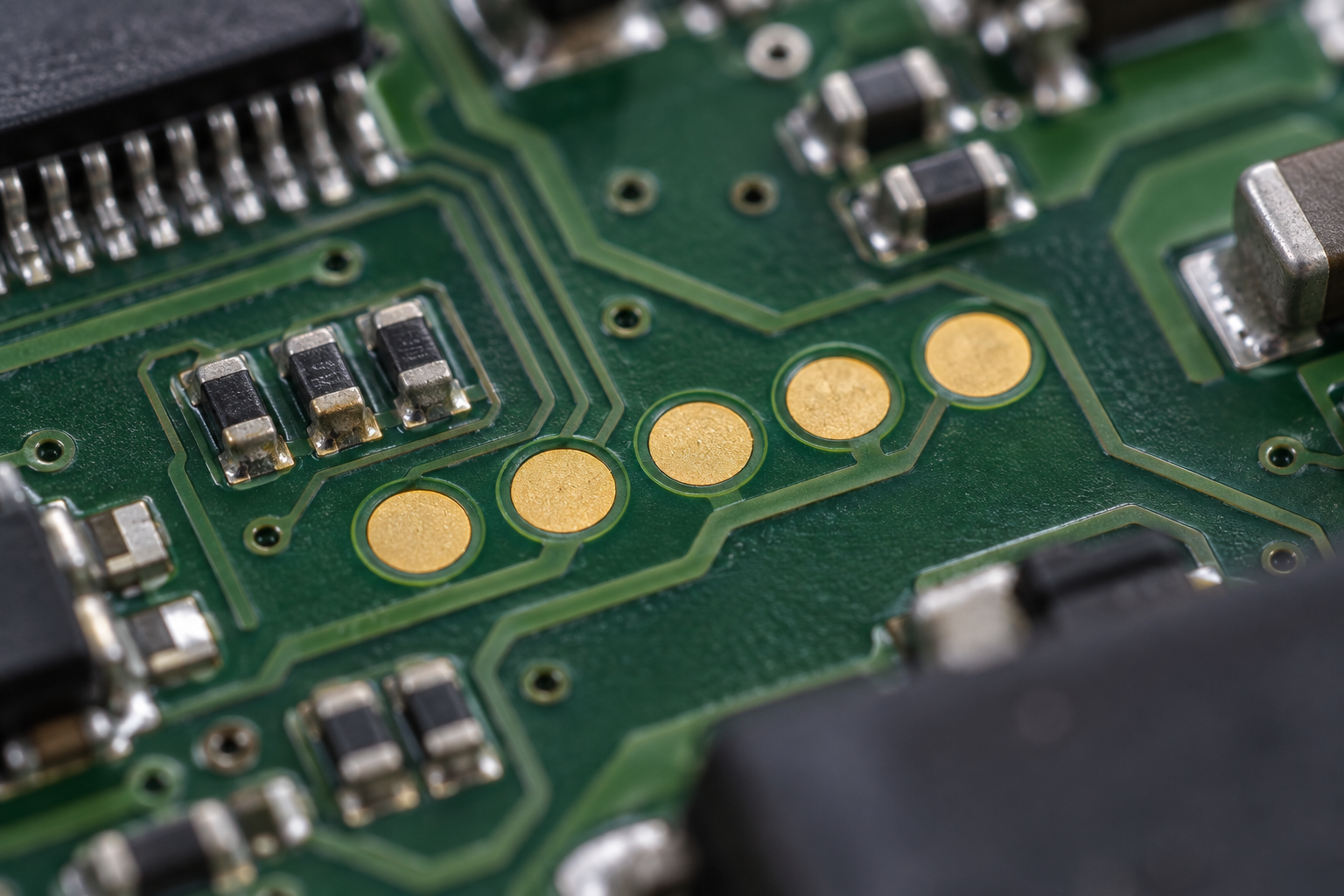
Suppose a supplier describes an image as a complete read, but the tool log identifies only an application transfer. The next step is to reconcile those two records, not to enlarge the file with padding. Similarly, a blank-looking region may be genuinely erased, omitted by the exporter or substituted by the acquisition tool. A byte pattern alone cannot establish which explanation is correct.
A disciplined comparison uses independently acquired evidence where available. Compare reported addresses, stable identification data and the structure of known-good files from the same confirmed variant. Record exclusions explicitly. If data flash was not obtained, write “data flash not acquired,” rather than allowing a customer to infer that the package is sufficient for complete migration.
Processor identification also constrains the analysis environment. The selected instruction-set support, memory model and peripheral definitions must correspond to the established device. A project that imports cleanly can still contain incorrect assumptions. Before interpreting application logic, test the model against several independent observations such as documented memory boundaries, plausible references and actual diagnostic behavior. Do not transfer SH7058 analysis assumptions merely because both ECUs were manufactured by Denso.
What a paid RH850 feasibility engagement should deliver
The first milestone should answer a purchase decision: can the required investigation proceed using the available ECU, files and access route, and what additional evidence is needed? Useful deliverables include a device identity record, a board/interface assessment, an acquisition coverage ledger and a scoped analysis plan. Each should distinguish confirmed facts from provisional conclusions.
A second milestone can target the business requirement itself: explaining a programming incompatibility, identifying the persistent regions needed for a controlled migration, or preparing a reproducible analysis environment for a tool-development team. The acceptance criteria should name the supported hardware and software revisions. “Works on RH850” is too broad to be a defensible engineering deliverable.
For example, a remanufacturing program may need repeatable intake classification across several board revisions, while a software team may need a validated address map for one firmware release. These projects require different reference material and validation effort. Defining that difference early makes the budget useful and prevents a narrow feasibility result from being mistaken for a production-ready repair procedure.
Discuss a Toyota Denso RH850 investigation
Our ECU reverse engineering service is suited to investigations where ordinary tool support leaves an unresolved hardware, memory or software question. We can scope the work around the evidence available and the decision your team needs to make, rather than treating every unsupported ECU as the same recovery problem.
Contact ReverseEngineer.net with clear ECU and processor photographs, the complete markings, untouched files, acquisition logs and the exact operation that failed. Include the tool and software versions, whether the unit still identifies through any interface, and the required outcome. This supports a specific proposal with analysis milestones, dependencies and measurable deliverables.
Let's Work Together
Working on an ECU, a firmware image, or a board? Send what you have.