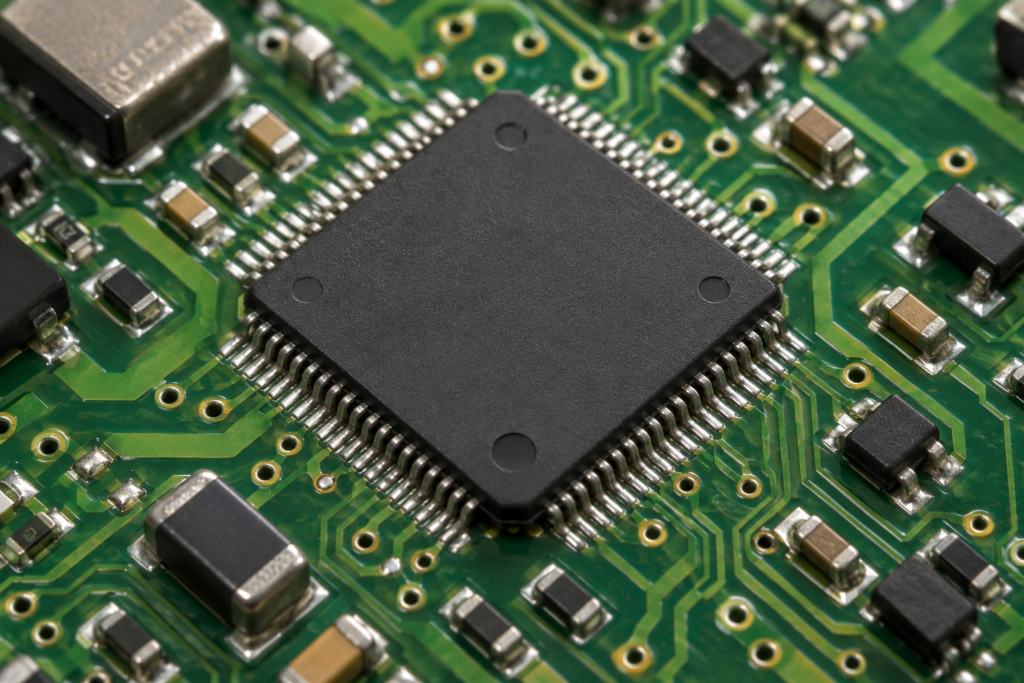
A firmware binary can produce thousands of readable instructions and still be interpreted incorrectly. In a Denso SH7058 investigation, a wrong processor assumption, incomplete memory image or misclassified data region can contaminate every later conclusion. Functions acquire misleading names, calibration references point to the wrong objects and a developer spends time explaining behavior that the ECU never executes. The first commercial milestone should be a trustworthy analysis foundation.
ReverseEngineer.net can build that foundation for ECU software developers, calibration-tool companies and specialist engineering teams. The deliverable is more than a disassembly export: it is an identified input, a justified memory map, validated code and data boundaries, and evidence connecting the requested function to the relevant firmware. This article focuses on that preparation, which is distinct from finding a table by visual similarity or modifying a known calibration.
The processor suffix and core matter
Renesas identifies the SH7058 with the SH-2E core. Its SuperH architecture material describes SH-2E as adding single-precision floating-point capability to SH-2. The exact device marking and corresponding documentation should determine the analysis assumptions. A similar family name is a starting point for research, not permission to substitute another instruction set or peripheral layout.
A Ghidra project discussion illustrates the practical concern: an analyst working with SH7058S reports difficulty selecting an appropriate SuperH interpretation. Some later numerical claims in that discussion are explicitly described as AI comparison results, so they should not be treated as independently verified measurements. The useful question is whether the selected decoder faithfully represents the identified target.
Check the decoder with a small, auditable sample
Before broad automatic analysis, select a small region whose origin and expected role can be justified. Compare the raw instruction words, decoded operations and control flow with the applicable architecture reference. The sample should exercise the features relevant to the investigation, rather than only common instructions that several related cores share. Keep a record of the tool version, language selection and any local processor-module changes.
Renesas’s SH7058 hardware manual describes fixed 16-bit instructions, PC-relative access to stored constants and delayed-branch behavior. These provide concrete checks for the decoder and control-flow model. They do not justify treating every aligned word as code. The classification of a particular byte range still needs evidence from the binary being investigated.
Establish what the file actually contains
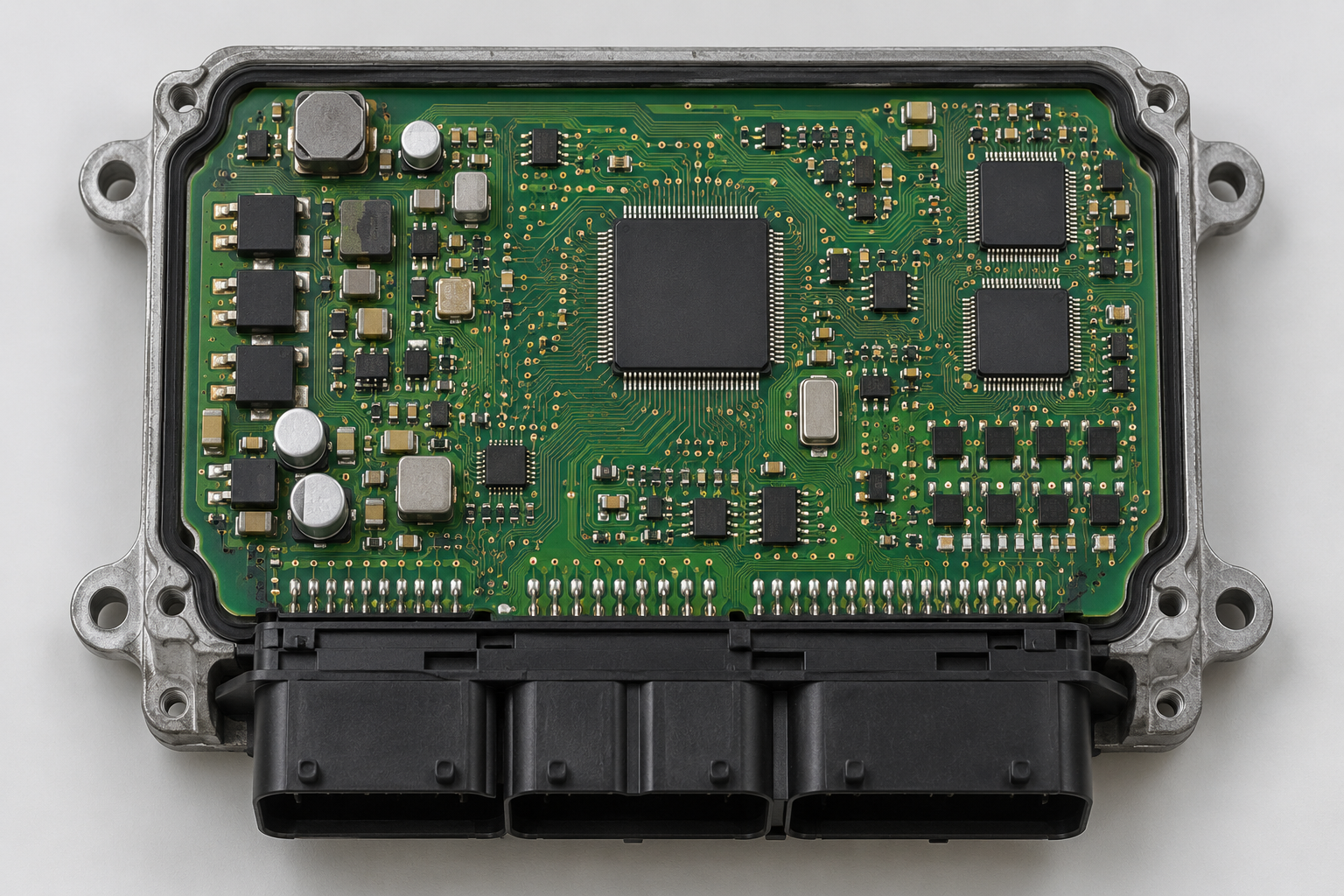
Record the acquisition tool, selected method, file size, packaging and controller identity. Determine whether the input is a direct memory acquisition, a calibration export or a programming container. A binary editor opening the file does not establish its runtime address. If the file is segmented or includes metadata, the analysis needs an explicit mapping between each payload and the region it represents.
The source remains unchanged and hashed. Any extracted or transformed copy should retain a reproducible record of how it was produced. Unknown coverage must remain visible in the project. An unrepresented memory region should not become a zero-filled region that later analysts mistake for observed hardware content. Our earlier discussion of virtual reads and physical backup coverage explains this acquisition distinction in more detail.
Build the memory map before trusting cross-references
The map should distinguish acquired nonvolatile content, runtime storage and device registers where their locations are established. Apply names and permissions carefully so that the analysis tool does not infer executable code from a register range or treat a runtime pointer as a file offset. Document any aliases or transformations only when supported by the identified device and acquisition format.
A useful sanity check follows several independently meaningful references. Do candidate pointers land in plausible regions? Do accesses use widths consistent with the object being addressed? Do startup-related routines refer to sensible destinations? Agreement across independent observations is stronger than one attractive address match. If the map explains one routine but breaks many others, revisit the assumptions instead of adding exceptions until the output looks convincing.
Classify code from evidence, not decode density
Many data sequences can be interpreted as valid instructions. A large amount of decoded text is therefore a poor measure of progress. Start from justified entry points and follow coherent control flow, checking calls, returns and branches. Where execution transfers indirectly, recover the target evidence rather than selecting a convenient function boundary. Mark unresolved destinations explicitly.
Candidate data regions should be classified through their use. Repeated values, alignment and visual patterns can help identify a table or pointer array, but those clues are not conclusive. A strong classification connects a region to accesses that explain its width, size and purpose. This prevents a literal pool, jump table or calibration object from being absorbed into a fictitious function.
Preserve the distinction between a constant and its meaning
A constant loaded by code may be an address, a numerical coefficient, a mask or a value used only during initialization. Naming it too early can bias the rest of the investigation. Follow its use and record the evidence supporting the interpretation. If several meanings remain possible, retain a neutral name until another observation resolves them.
The same discipline applies to calibration candidates. A smooth sequence does not establish an axis, and a matrix-shaped region does not identify its physical units. Connect the candidate to the consuming routine, inputs and selection conditions. The ROM definition validation workflow addresses the later task of turning verified locations and conversions into an editing package; the present task is to establish the evidence those definitions require.
Decompilation depends on more than instruction decoding
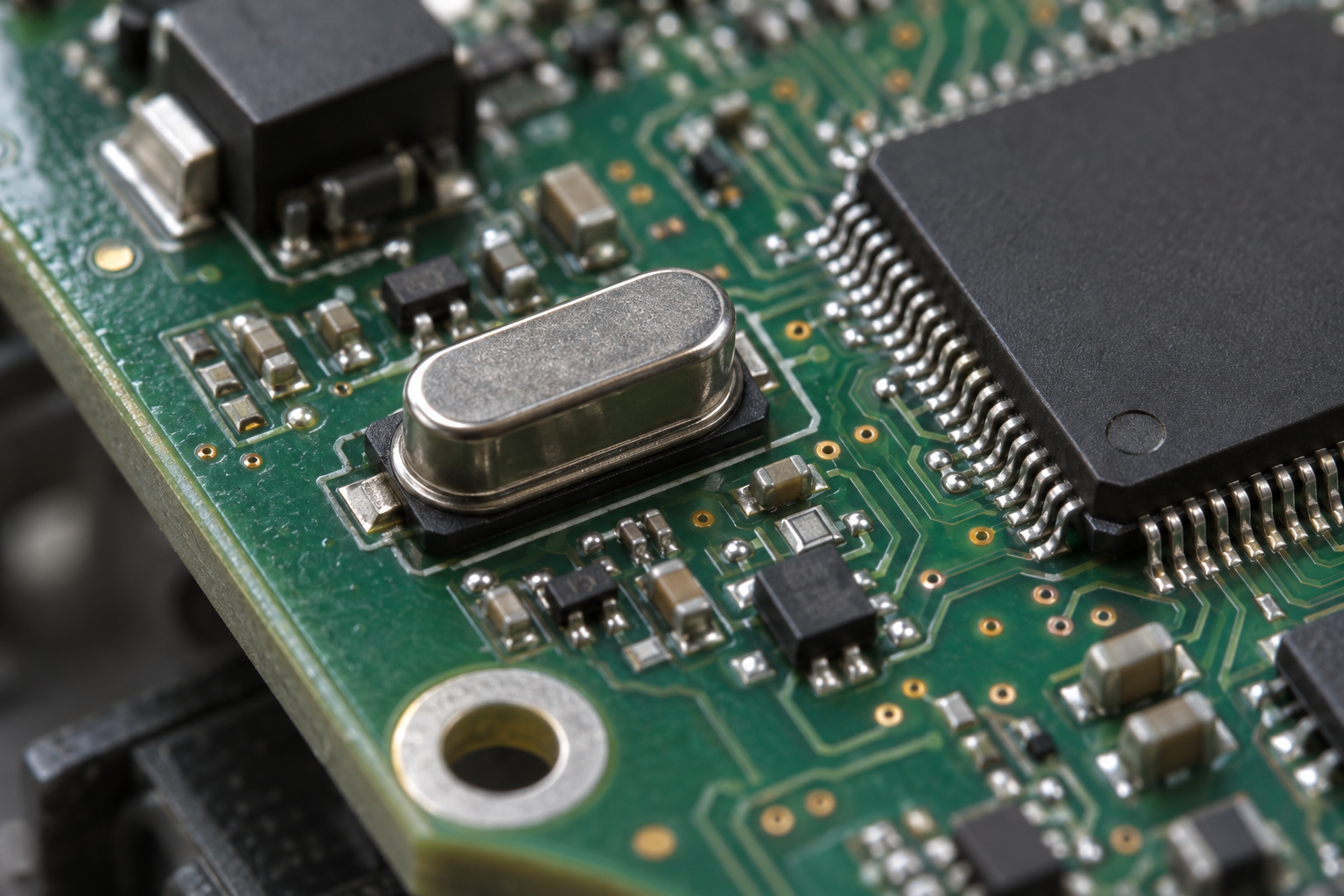
Even a correct instruction stream can produce misleading high-level output if function boundaries, calling conventions or data types are wrong. Review how arguments are passed and results are consumed across representative call sites. A proposed prototype should explain callers as well as the function body. When it does not, the decompiler’s convenient variable names should not be treated as recovered source code.
Inspect critical logic at both the instruction and decompiled levels. This is especially useful around mixed integer and floating-point calculations, indirect calls and state-dependent data access. The objective is not to make every function look elegant in C-like output. It is to establish a defensible explanation of the requested behavior, with unresolved tool assumptions kept separate from firmware findings.
Use peripheral references as anchors, with exact applicability
Register accesses can help connect low-level code to a hardware function when the device documentation and memory map are correct. A recognized register block may narrow a routine’s role, but it does not automatically explain the application-level meaning of the data. The analysis should distinguish hardware initialization, transfer handling and higher-level processing before assigning a business-facing function name.
Do not transfer a peripheral map from a related part without checking it. Likewise, do not assume a bus payload uses the same representation as a value in processor memory. Data may be packed, reordered or scaled along the path. Following those transformations is often what turns a general firmware project into a useful answer for a diagnostic or calibration integration.
Corroborate the requested behavior with observations
Where suitable authorized hardware access exists, observations can test a static hypothesis. Diagnostic responses, controlled input changes or traces can help determine whether the identified path participates in the behavior of interest. The test should state what it can discriminate: two hypotheses that predict the same visible result have not been distinguished merely because the result appears plausible.
Hardware evidence should be linked to the exact binary and setup. A test on a neighboring software revision may guide research but does not validate the current one. If dynamic validation is unavailable, the report should state that the conclusion rests on static analysis and describe its confidence. This gives the customer a realistic basis for deciding whether implementation or additional acquisition is the next justified step.
What a professional SH7058 analysis package contains
A useful package includes the source inventory and hashes, acquisition-to-memory mapping, processor assumptions, checked decoder behavior, named regions and a traceable set of function findings. It should distinguish confirmed code, confirmed data and unresolved areas. Where scripts or custom definitions are developed, their versions and required tool environment belong with the project so another engineer can reproduce the analysis.
Acceptance should follow the commercial objective. A calibration-tool company may need verified table consumers and data conversions. A diagnostics project may need request handling and state transitions. A firmware migration project may need a correspondence between selected functions in two releases. Each is narrower and more testable than a promise to understand the entire ECU. Our Ghidra automotive ECU analysis guide provides broader context.
Scope the analysis around the blocked engineering decision
Our ECU reverse engineering services support targeted firmware investigations where the supplied evidence permits them. The initial scope should identify the function to recover, the software versions involved and the required form of evidence. This helps a customer budget for a usable result rather than an open-ended disassembly exercise.
Contact ReverseEngineer.net with the ECU and processor identification, untouched files, acquisition details, existing analysis project if available and the specific question your team cannot resolve. Examples of contradictory decoding or uncertain boundaries are particularly useful. A proposal can then define the analysis milestones, reference requirements and validation limits before deeper work begins.
Let's Work Together
Working on an ECU, a firmware image, or a board? Send what you have.